Rob Ball:
Everything Beautiful is Far Away
On View: 1- 28 May, 2026
Everything Beautiful is Far Away: A Survey of the Coastal Edge
An essay by Dr. Mark Rawlinson
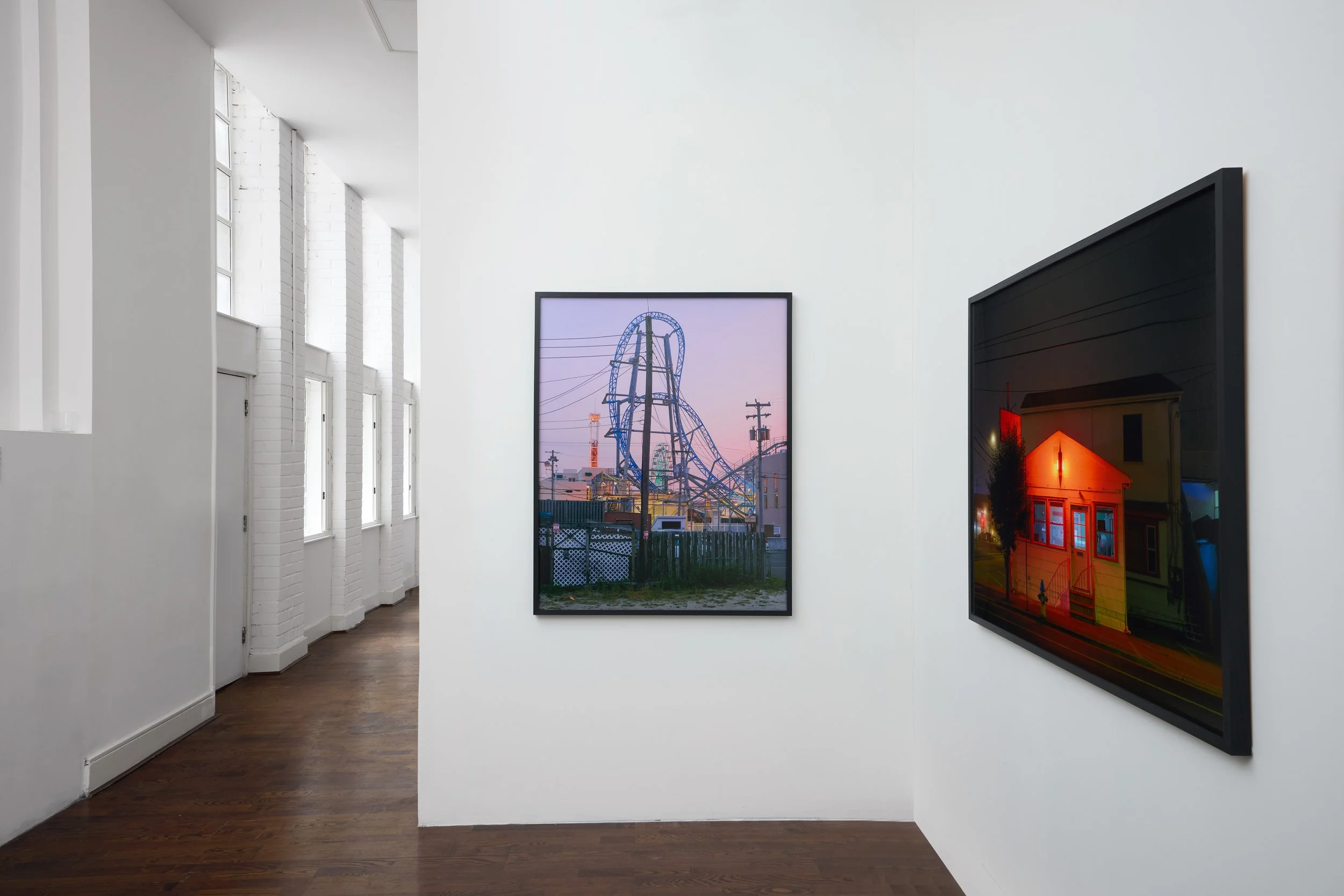
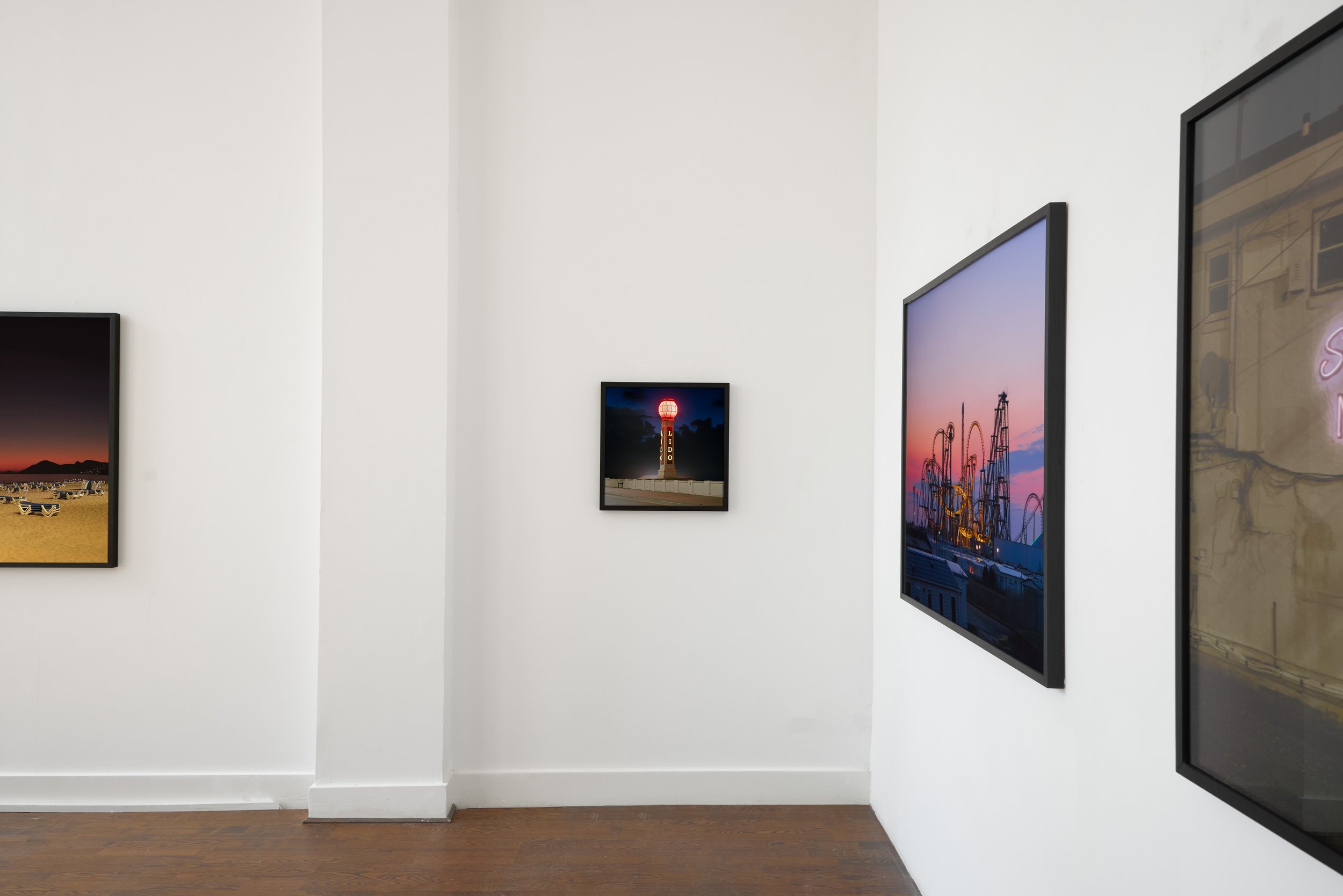
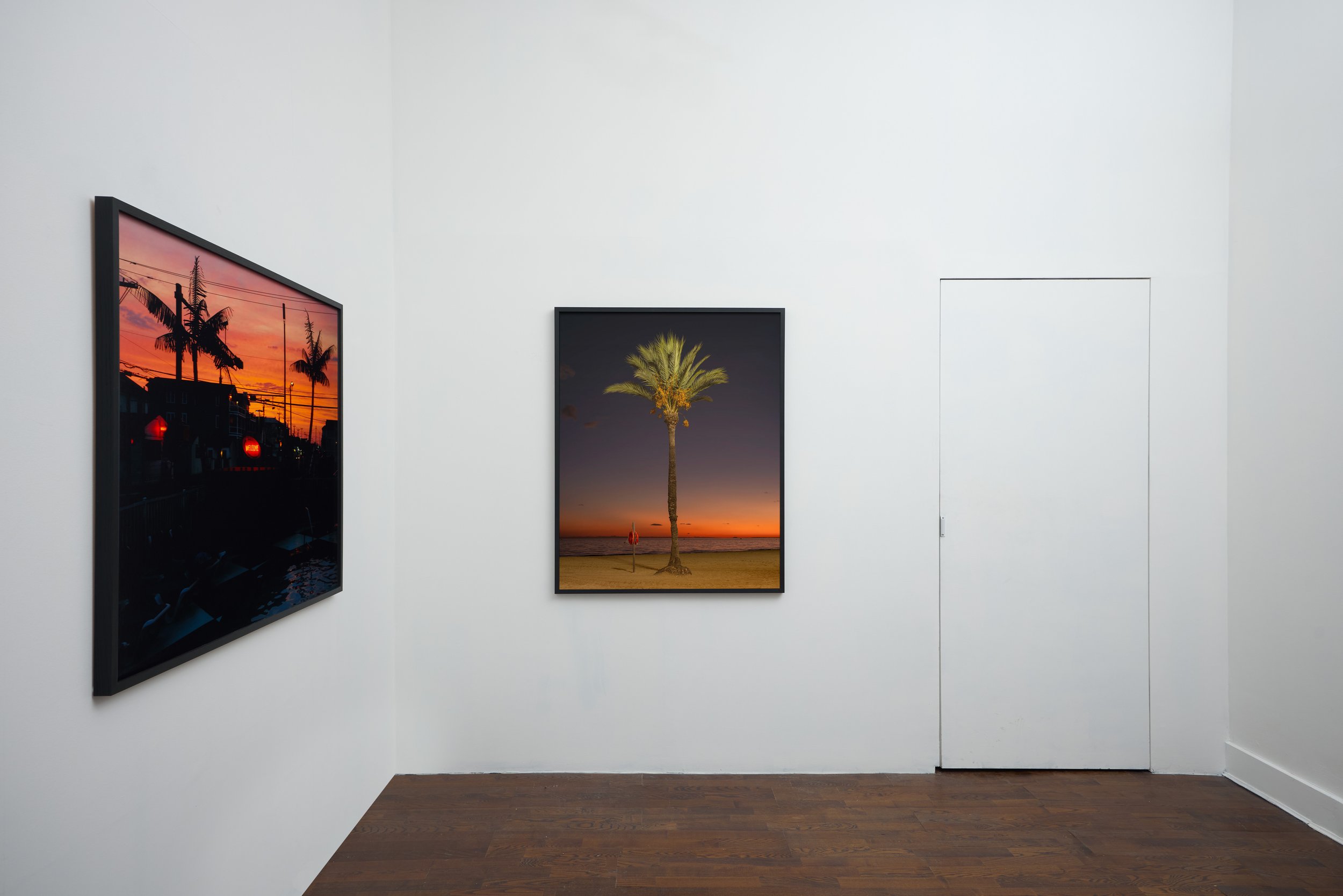
The title of Rob Ball’s exhibition, Everything Beautiful is Far Away, offers a compelling way into a fifteen-year photographic journey that includes over 100 seaside resorts, from the damp, neon-lit promenades of Blackpool to the fading ‘Doo-Wop’ motels of Wildwood, New Jersey. The title implies a distance that is both metaphysical and geographical, capturing the reality of the irregular beauty to be found in these places, and in the idealised notion of beauty that fuels the holiday dream. It evokes the anticipation of future travel, of something to look forward to, an escape from the repetitive nature of work, and its tight regulation of personal time.
For Ball, this investigation feels deeply personal. Having holidayed on the Costas as a child in the 1980s and now living on the Kent coast, he returns to these coastal resorts as a working-class observer: at once connected by history yet critically distant as a photographic visitor. These photographs are not sneering; they avoid stereotyping or taking cheap shots at those enjoying mass-market recreation: the package holiday, the all-inclusive deal. Ball’s meditative approach to image-making, influenced by the New Topographics landscape photographers of the 1970s, stands in stark contrast to many documentary photography projects. One can detect in these photographs the sharp, analytical eye of Lewis Baltz or the Bechers, combined with the more empathetic gaze of Robert Adams. The result is a series of works built on affection and respect, but without nostalgia or naivety.
At the heart of Ball’s investigation is a fascination with the in-betweenness of these places and the tensions that exist between authenticity and repair. This is evident in his 2019 project Funland, which paid homage to the beauty of the British seafront, a landscape characterised by ‘damp and disorder.’ Here, buildings are continuously adapted, and their functions restaged, a process of transformation from theatres to arcades to pound shops. There is a distinct authenticity in this lawlessness for Ball. He considers recent coastal developments not as simply regeneration, but as a form of repair. It is a term that evokes ongoing vulnerability, where the coast and its architecture are patched and repatched, like a sutured wound, vulnerable to breach or even collapse. Like an ageing boxer chasing former glories through comeback after comeback, but every time falling shorter of the mark.
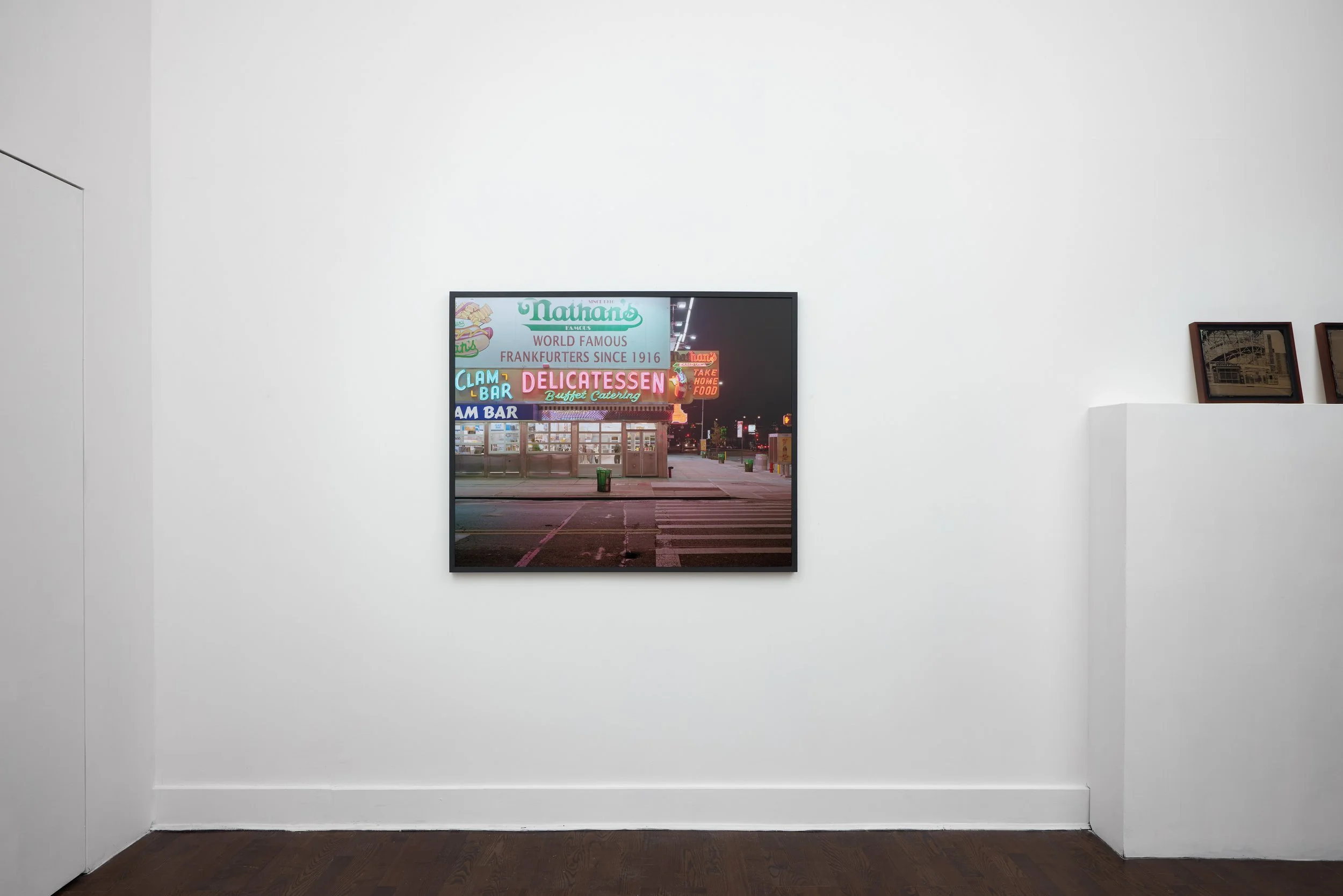
This fragility is reflected in Ball's use of the tintype process, especially in his works on Margate and Coney Island. It’s an old-fashioned, out-dated medium that Ball uses because of its ‘materiality,’ where each ferrotype is a unique artefact, bearing both the maker's fingerprints and the dust of its environment. It literally and figuratively bears the impression of its surroundings. The tintype’s natural flaws and fractured images act as a metaphor for the unstable environment and uncertain future of coastal towns. Long exposure times leave only traces of people, which, like the fading sounds of their thrilling screams, turn iconic rides such as the Cyclone or the Scenic Railway into liminal spaces, appearing empty yet secretly alive with the presence of former riders.
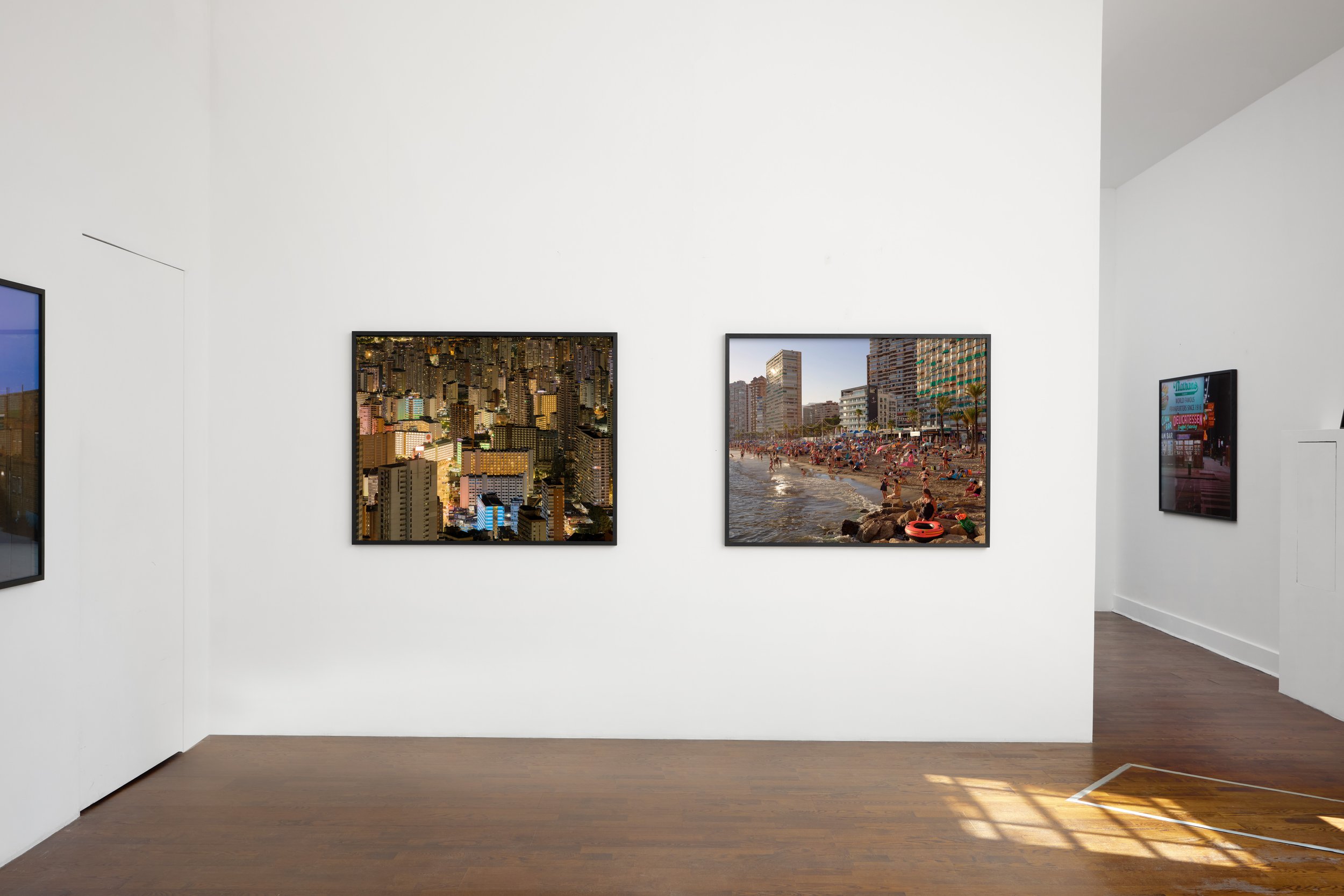
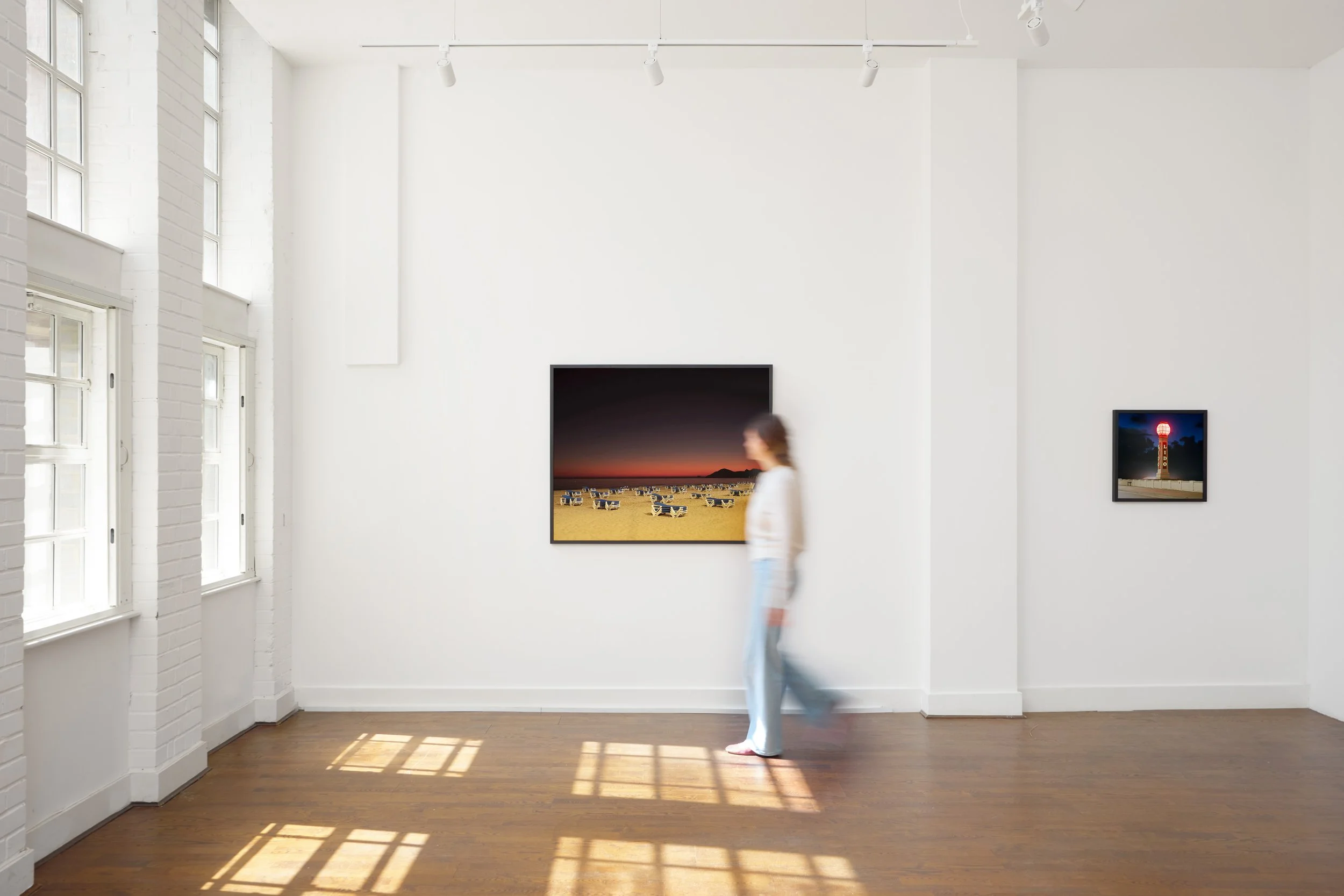
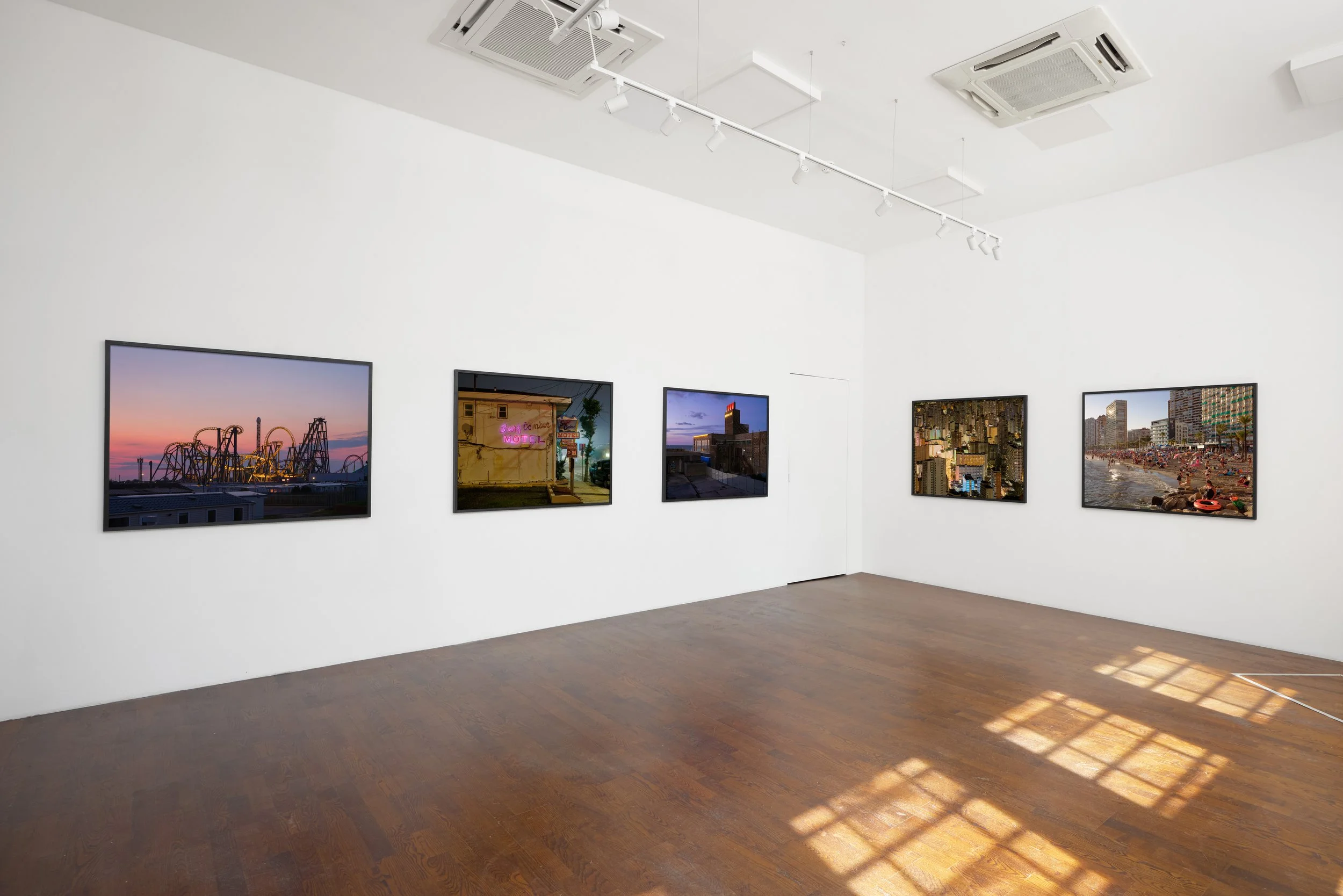
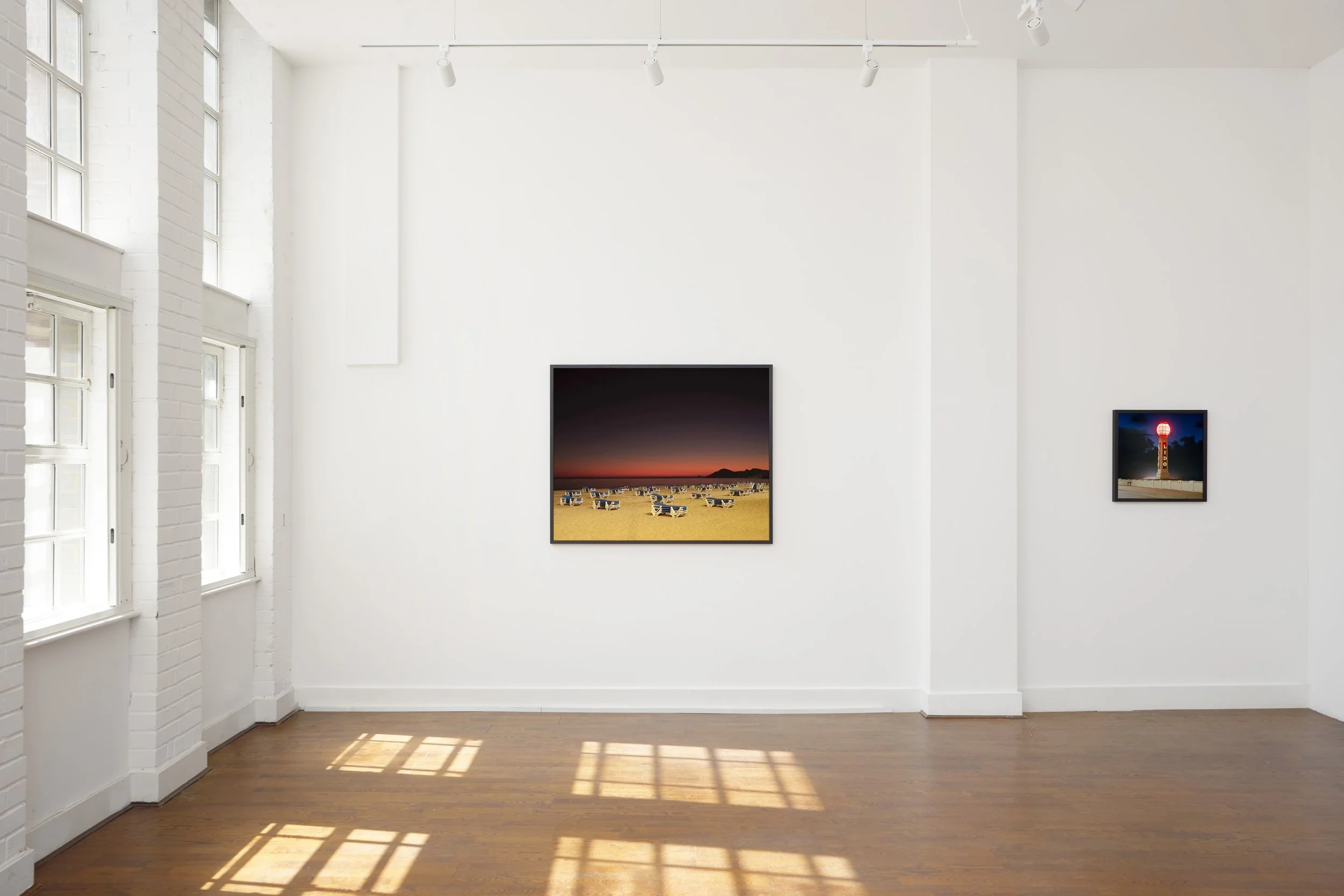
The exhibition explores these themes worldwide, especially in the ‘holiday utopias’ of Benidorm and Wildwood. In Benidorm, Ball investigates what remains of the 'Pan-European Holiday Utopia' dreamed-up in the 1950s by Mayor Pedro Zaragoza Orts. It was Orts who envisioned a resort where luxuries like sea views and shared gardens were accessible to the masses, not just the elite. Ball’s photographs of Benidorm highlight the 'electric drama' of its neon-lit streets, focusing on the ‘blitzkrieg of invitations’ to eat, dance, and drink. Although often criticised as uncultured, Benidorm represents for significant community a ‘home-from-home’ where inhibitions are loosened, and there is a pervasive and conscious determination to make the most of their limited time away.
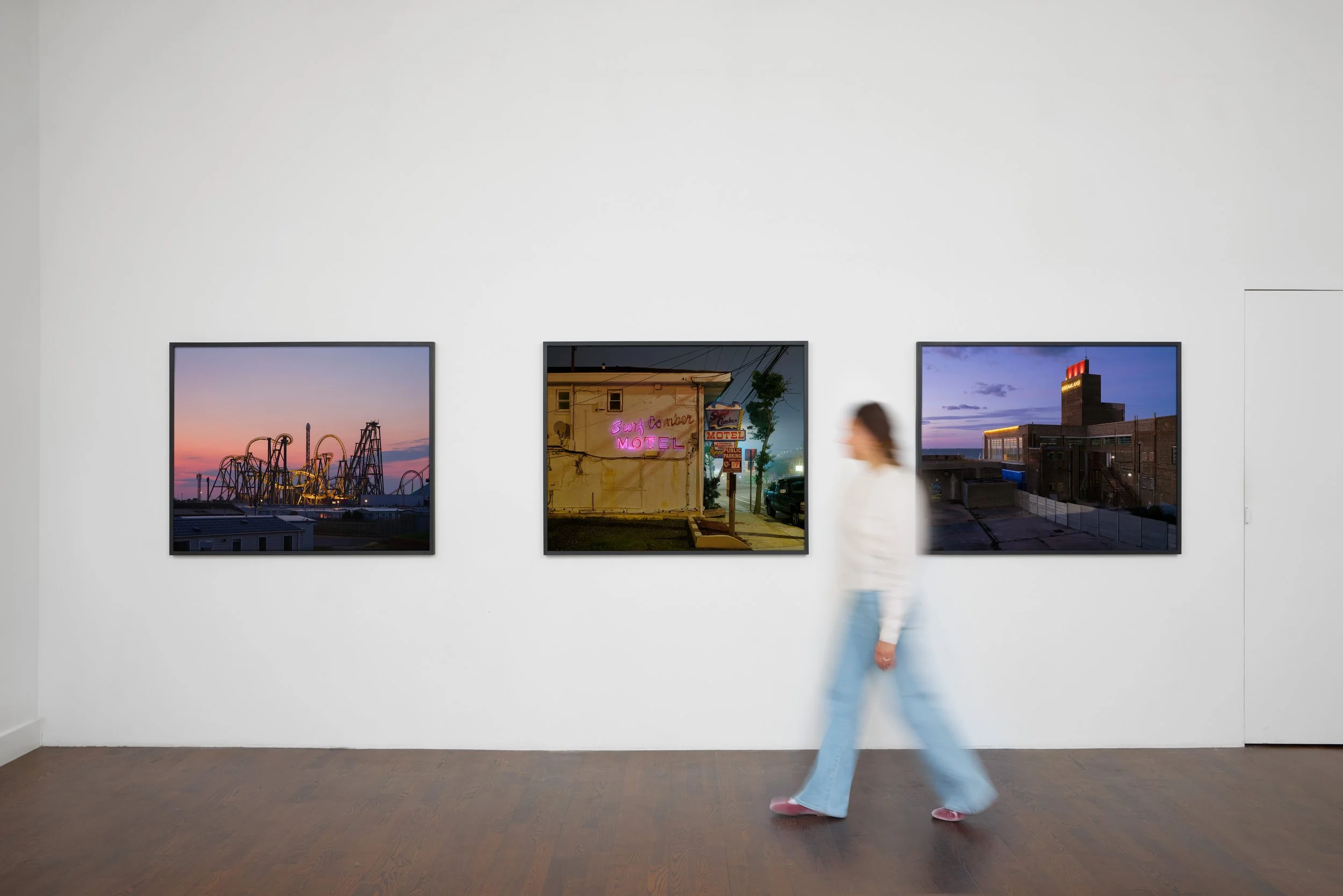
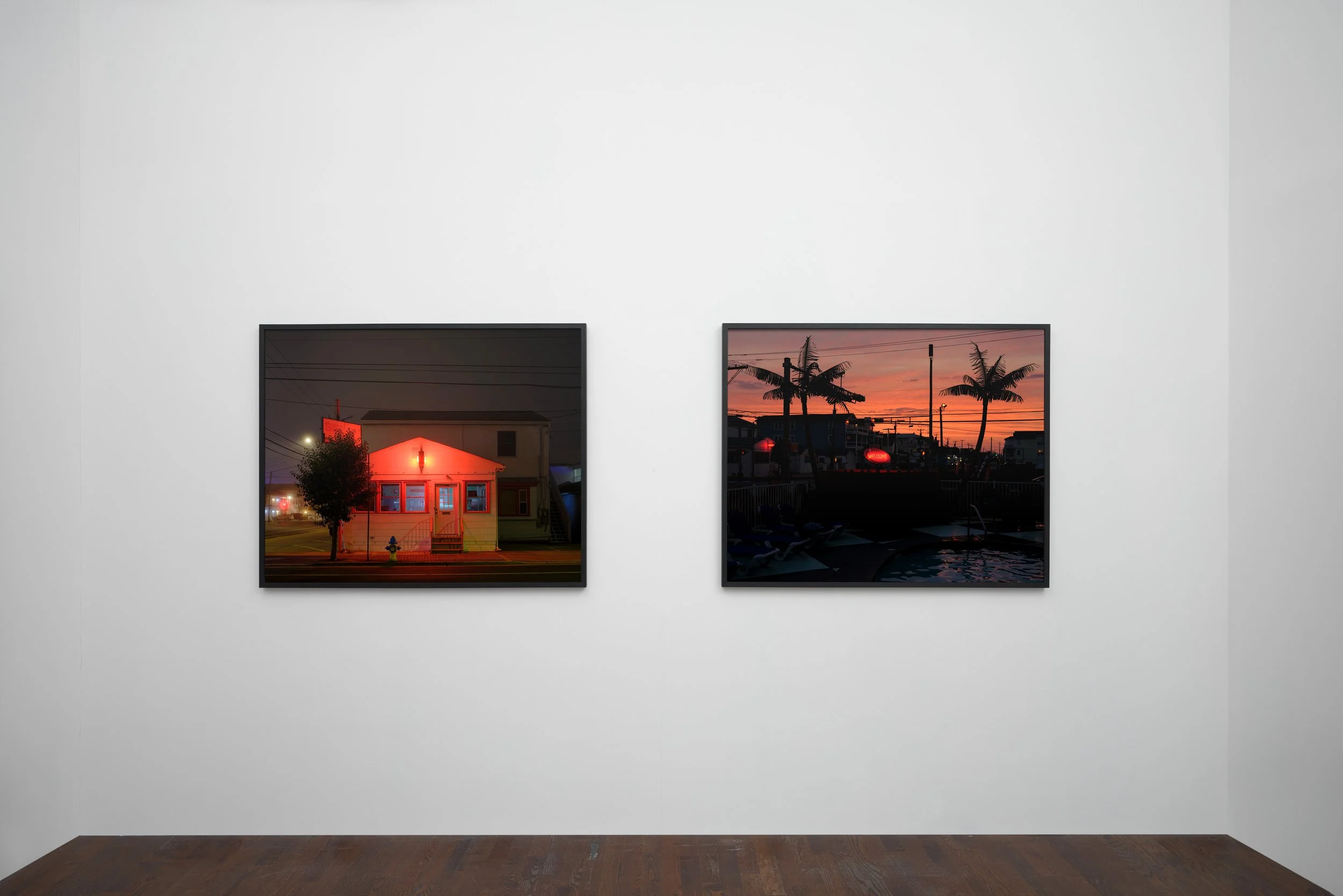
Wildwood, New Jersey, the 'blue-collar Riviera’, shares a striking cultural and economic connection with Benidorm. Like its Spanish counterpart, Wildwood thrived as post-war improvements in wages and holiday leave transformed industrial workers into leisure consumers, offering a vital escape from numbingly boring work routines. Ball’s photographs depict Wildwood as a 'wonderland of authenticity,' a place where those who appreciate its 'Doo-Wop' architecture see a beauty that is increasingly under threat. As a carnival of mid-century excess that borrows modernism’s language and enhances it with vibrant paint and ‘vulgar’ neon signs, the resort’s future remains uncertain. The beauty Ball captures is inevitably shadowed by the threat of disappearance; in Wildwood, much like the British resorts in his survey, the wholesale destruction of historic structures is a constant reality as developers prioritise profit over the historical and communal significance of these spaces.
Everything Beautiful is Far Away is a guarded celebration of the gritty authenticity found at culture’s edge. Guarded because Ball avoids both shallow praise and easy cynicism, he recognises the complexities of a landscape that is complex, baffling, and deeply human: at its heart, Ball’s project is about loss. He embraces the damp and disorder of the physical site and finds value in the spaces in between. These photographs present the irrepressible optimism of shop workers who, against the odds, create Vegas-inspired facades without the climate or the budget. He captures these spaces before the next wave of changes washes in and washes out. The beauty implied by the title lies in the unwavering resilience of these communities and the ‘boozy, jovial fantasy’ they offer. It remains ‘far away’ only to those who do not ‘know its secret’—the secret of people who return ‘time after time’ to find joy in a landscape of ‘damp and disorder’ before heading back to work on Monday with a healthy glow. Ball acts as a witness to this dream, capturing the meditative resilience of the shoreline through the eyes of someone who truly belongs there.