Min Woo Nam: The Aftermath
20 February - 19 March, 2026
The Mathematics of Depth: Min Woo Nam’s Meaningful Arrangements
An essay by Matthew Holman.
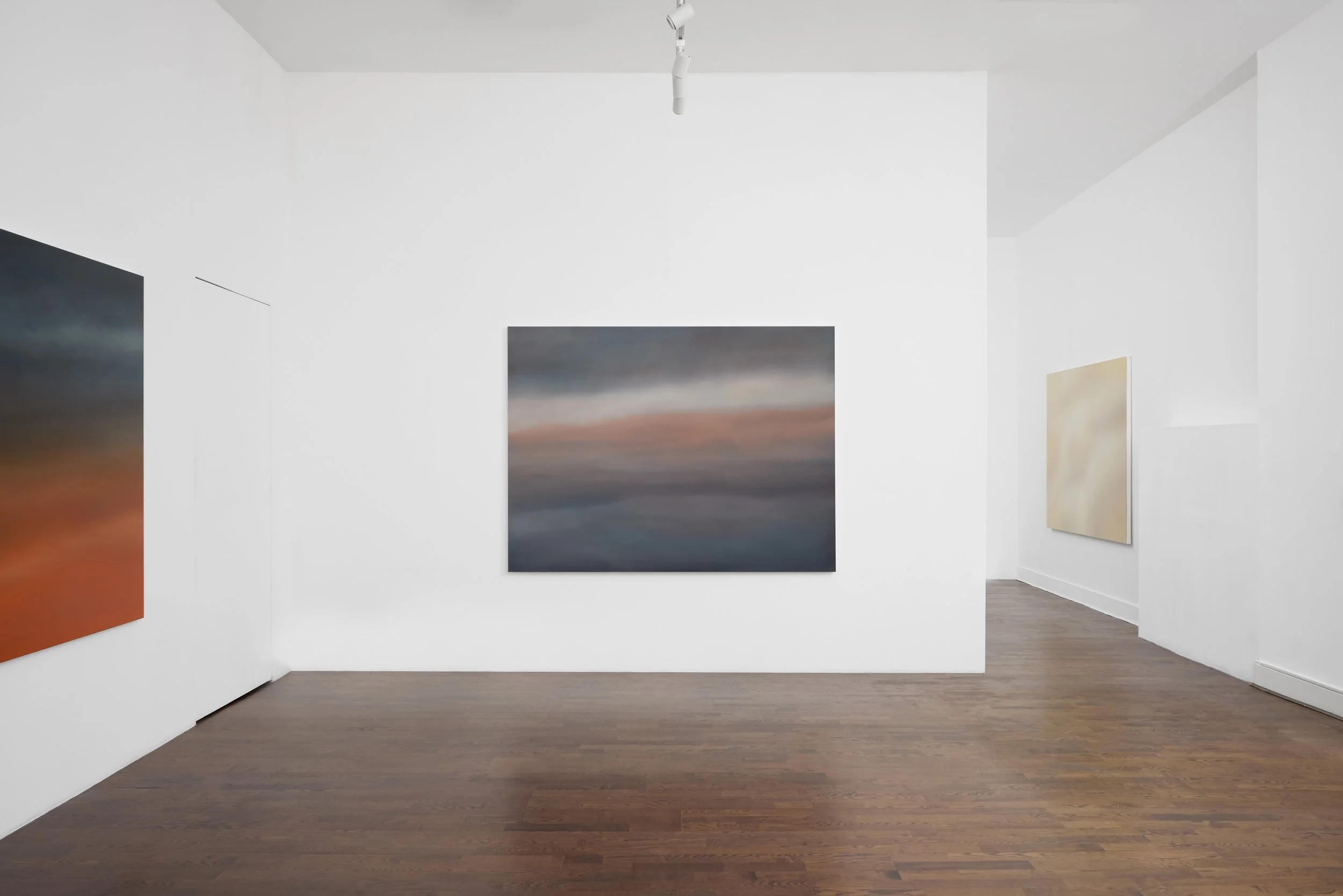
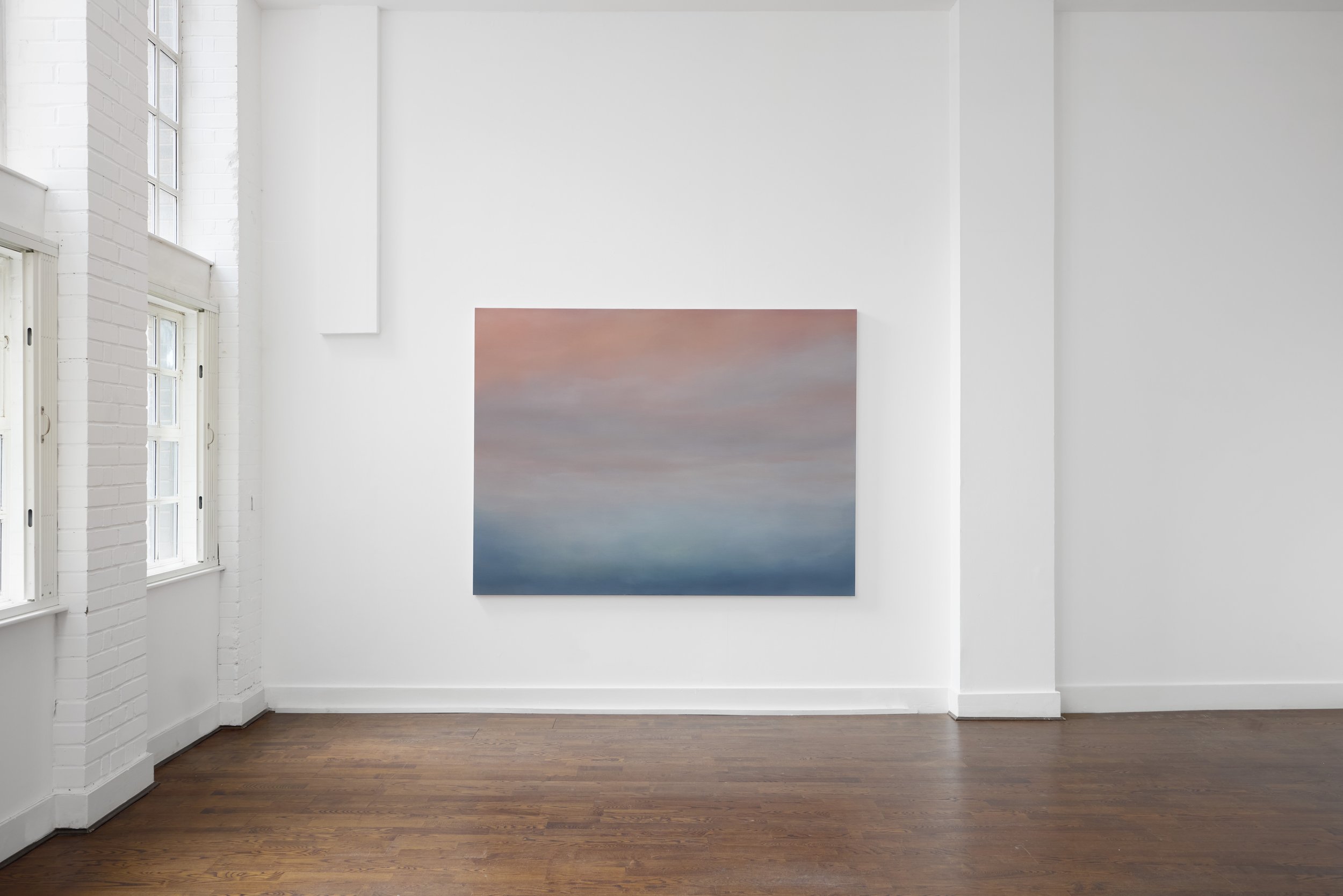
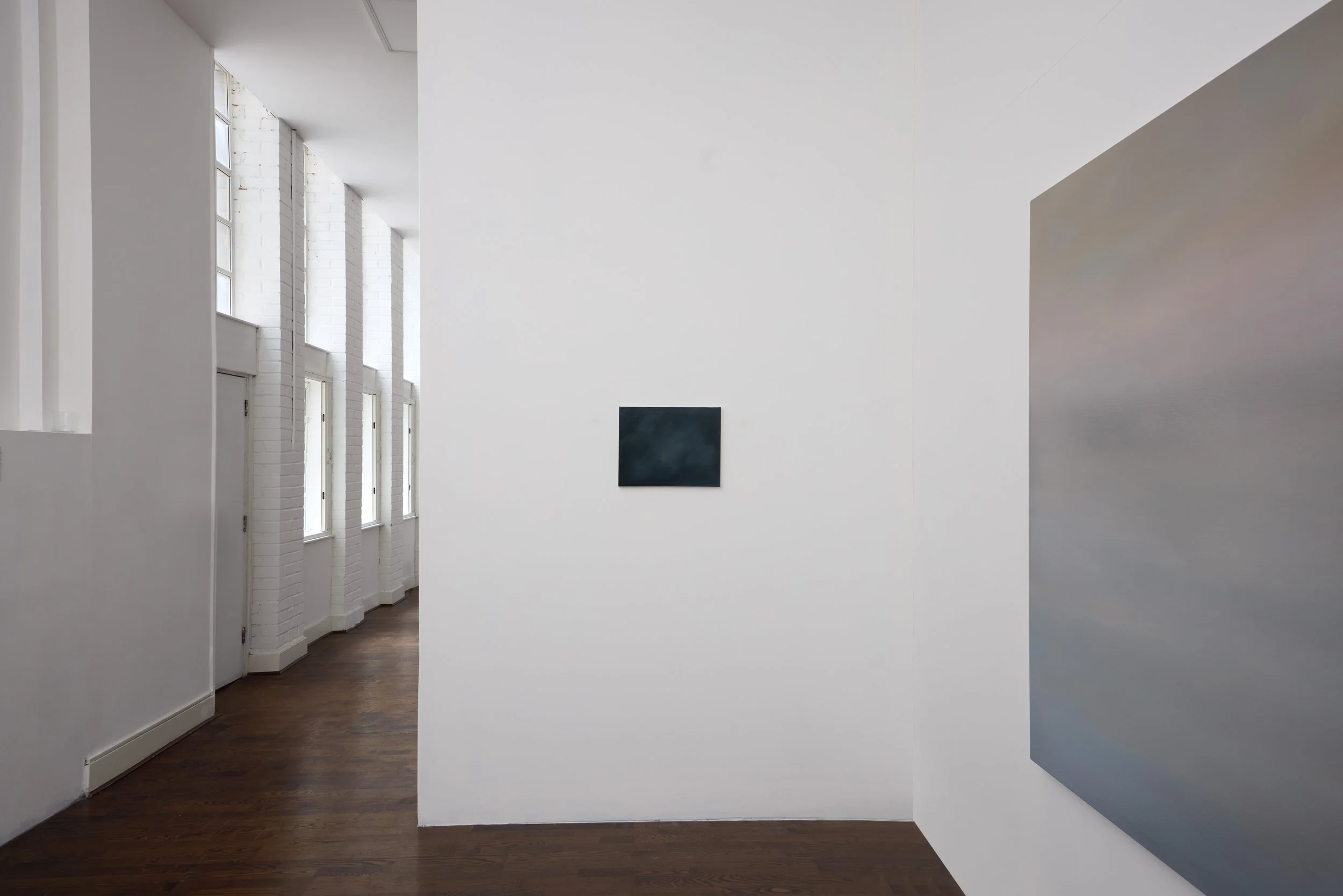
Imagine a coastline just after dusk. Fog erases the distance to the horizon; fractured, faint colours tremble across the water like particles suspended in mist, never settling. The air is heavy with a mysterious material residue, like turpentine lingering in a studio after a long day’s work, softening the edges of things. Forms – the possible heft of a small boat – hesitate before becoming objects, appearing only to dissolve again. In this suspended interval, between seeing and imagining, between imagining and recognising a place we have seen before in a picture encountered for the first time, the painter’s world begins. Are Min Woo Nam’s paintings, titled after My Khe Beach in northeastern Vietnam, truly landscapes, or are we surrendering to pareidolia, discovering meaningful patterns in accidental arrangements of marks? The answer lies between. These works are abstractions that summon the rhythms of the natural world without ever assuming its literal form.
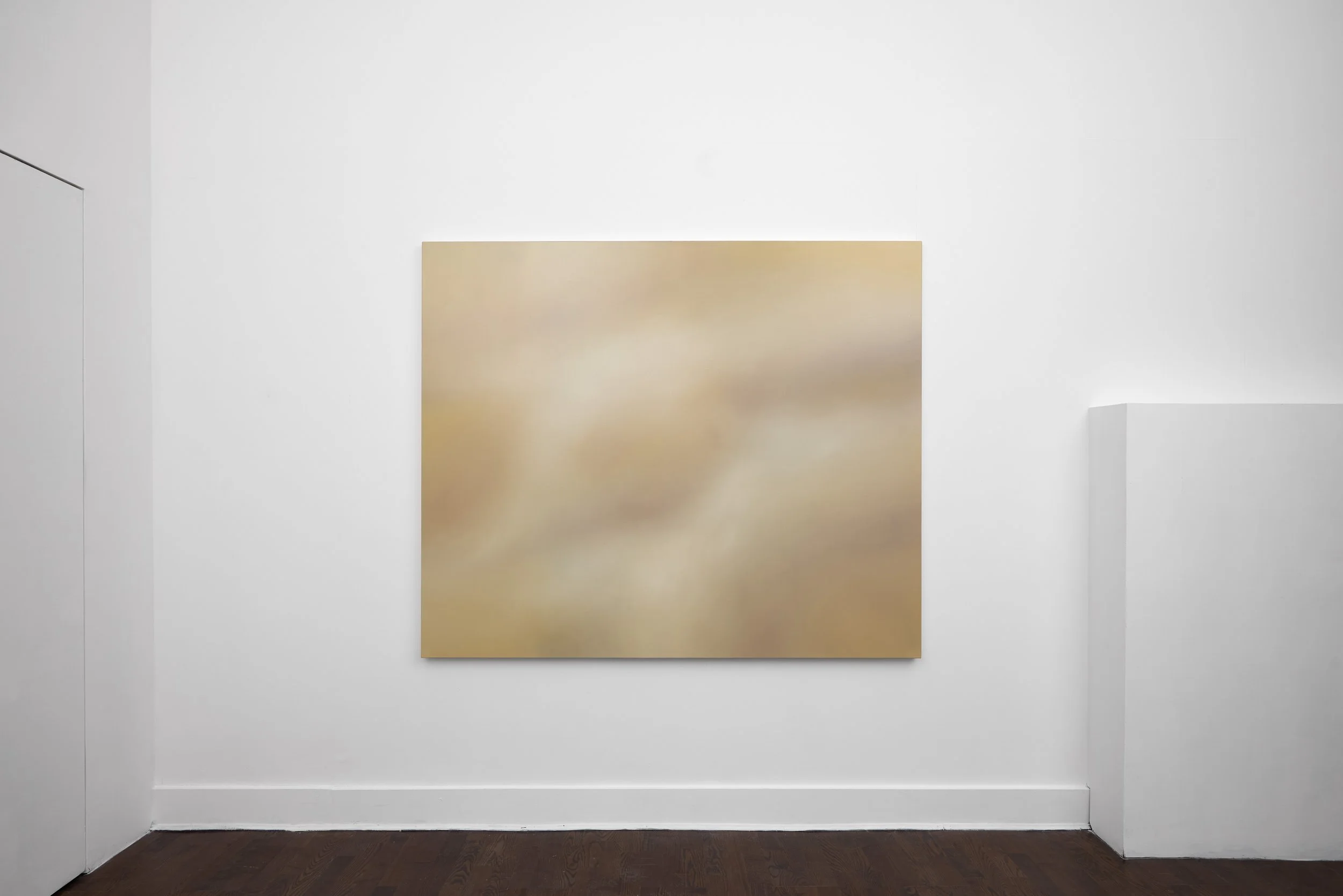
For this reason, it is not immaterial to note that the colours in Nam’s paintings are made by the artist himself. They are created from powdered pigments sourced from Zecchi’s, the famed art supplier that became one of the only sources for traditional Renaissance pigments after the 1966 Arno flood tore through Florence with mud-filled waters, destroying infrastructure and damaging thousands of artworks. Working with these raw materials means that colour cannot be industrially standardised. Each mixture depends upon humidity, pressure, oil absorption, and hand movement. As such, Nam – like the Florentine masters Donatello and Michelangelo – can never produce exactly the same colour twice. Colour, then, emerges under contingent conditions. In 2024, while artist-in-residence at the Vannucci Artist Residency in Umbria, Nam’s practice became even more attuned to this instability: the climate, mineral dust in the air, and slower rhythms of rural working life altered drying times and pigment behaviour. The surfaces record these conditions: passages cloud, granulate, or bloom where the pigment met moisture or resisted the oil. What appears atmospheric is therefore literal – the image is not a depiction of environment, but the residue of one.
To make a colour in this way is a physical procedure rather than a choice from a palette. Dry pigment is first ground with a glass muller into cold-pressed linseed oil on a slab. Too little oil leaves the paint friable and matte; too much makes it slick and slow to dry. The mixture is worked repeatedly until it holds a short peak, then left to rest so trapped air can escape. Even then, the behaviour of the paint shifts from day to day. Ultramarine thickens quickly and drags under the brush; iron oxides spread and stain; earth pigments sink into the weave of the canvas. Nam adjusts pressure, sometimes pushing pigment into the support with a flat brush, sometimes lifting it off again with a rag. Layers are wiped back while still wet so that earlier colour remains as a haze beneath the surface. The paintings accumulate not through additive detail but through subtraction and revision. What looks soft at a distance is, up close, the result of abrasion: edges scumbled, dragged, and partially erased.
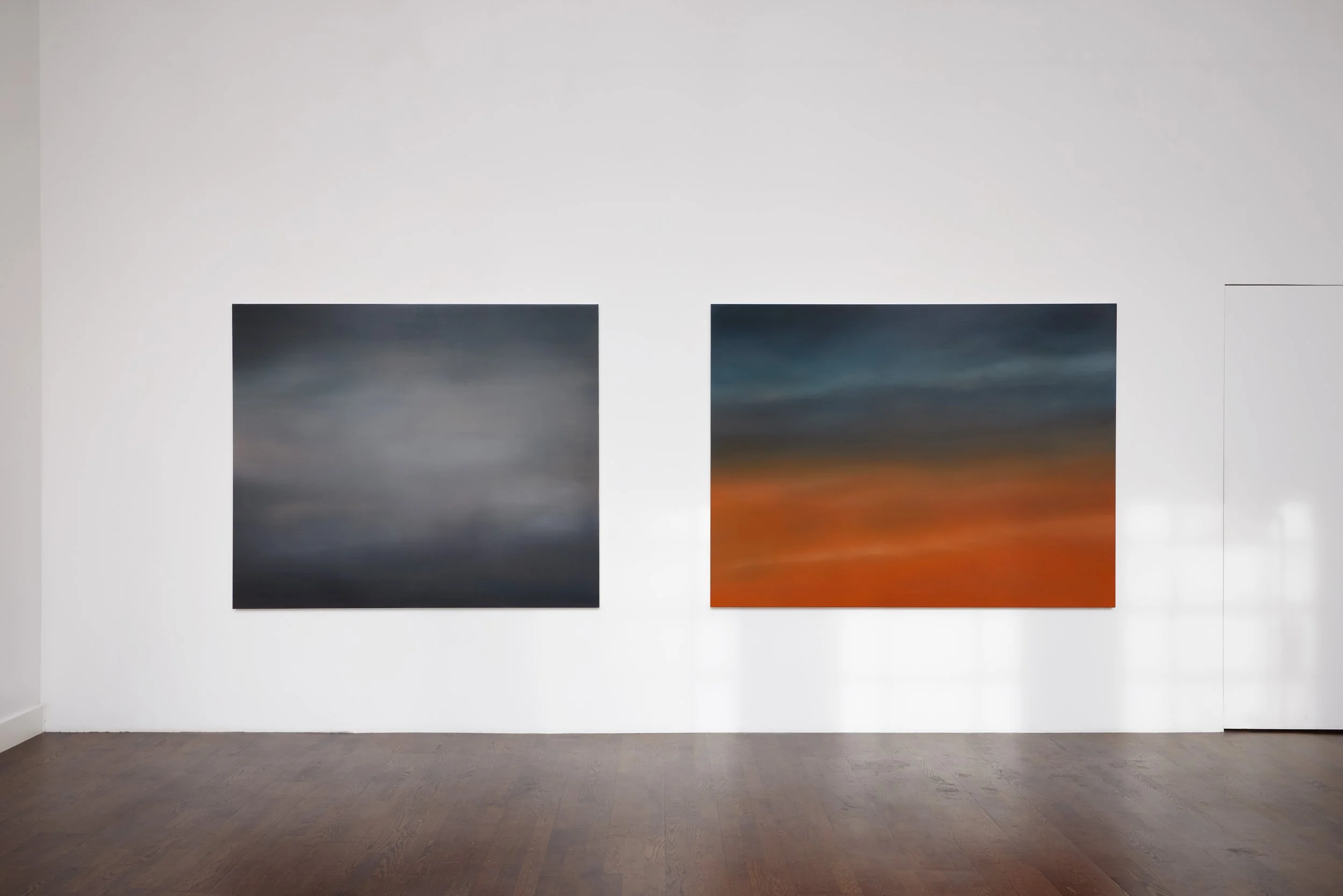
For Nam, painting is as much about ratios and relational balances as it is about the pareidolia viewers rely upon to understand abstraction through reference to the natural world. Before studying painting at the Royal College of Art, Nam read mathematics at the London School of Economics, and this background remains legible in the work. The canvases often organise themselves around proportional relationships – weighted divisions, distributed tonal densities, calibrated chromatic tension. A horizontal line may sit slightly above the centre so that the lower field carries more visual mass; a darker register is offset by a dispersed scattering of lighter marks. Yet what we perceive in front of them is not the distillation of mathematical principles onto the canvas but a beguiling control of atmosphere. A band becomes a horizon; a stain becomes cloud; a blur suggests mist or reflected water. The paintings sit precisely at the point where calculation gives way to imagination, and it is this moment – when the belief in the strength of causality is weakest – that these works come into being.
‘I am interested in acausal events’, Nam explains to me, as winter rain thrashes against the window of his central London studio. ‘They are the opposite of a causal way of seeing the world – the dominant perspective in the West. I seek out phenomena in the studio that cannot be explained by pure cause and effect.’ Here Nam’s thinking aligns closely with Carl Jung’s theory of synchronicity. ‘Meaningful coincidences are thinkable as pure chance’, wrote Jung. ‘But the more they multiply and the greater and the more exact the correspondence is, the more their probability sinks and their unthinkability increases, until they can no longer be regarded as pure chance but, for lack of a causal explanation, have to be thought of as meaningful arrangements.’ Nam’s studio practice courts precisely these ‘meaningful arrangements.’ The paintings are not controlled compositions in the classical sense, nor are they fully aleatory. Instead, they are produced through a system in which preparation, ratio, and repetition invite unforeseen occurrences: pigment separating from binder, colour bleeding into adjacent zones, or tonal harmonies emerging that were not planned but, reckoning with the canvas in front of you, feel inevitable. What matters is not randomness but significance without direct causation – an order that appears rather than one that is imposed.
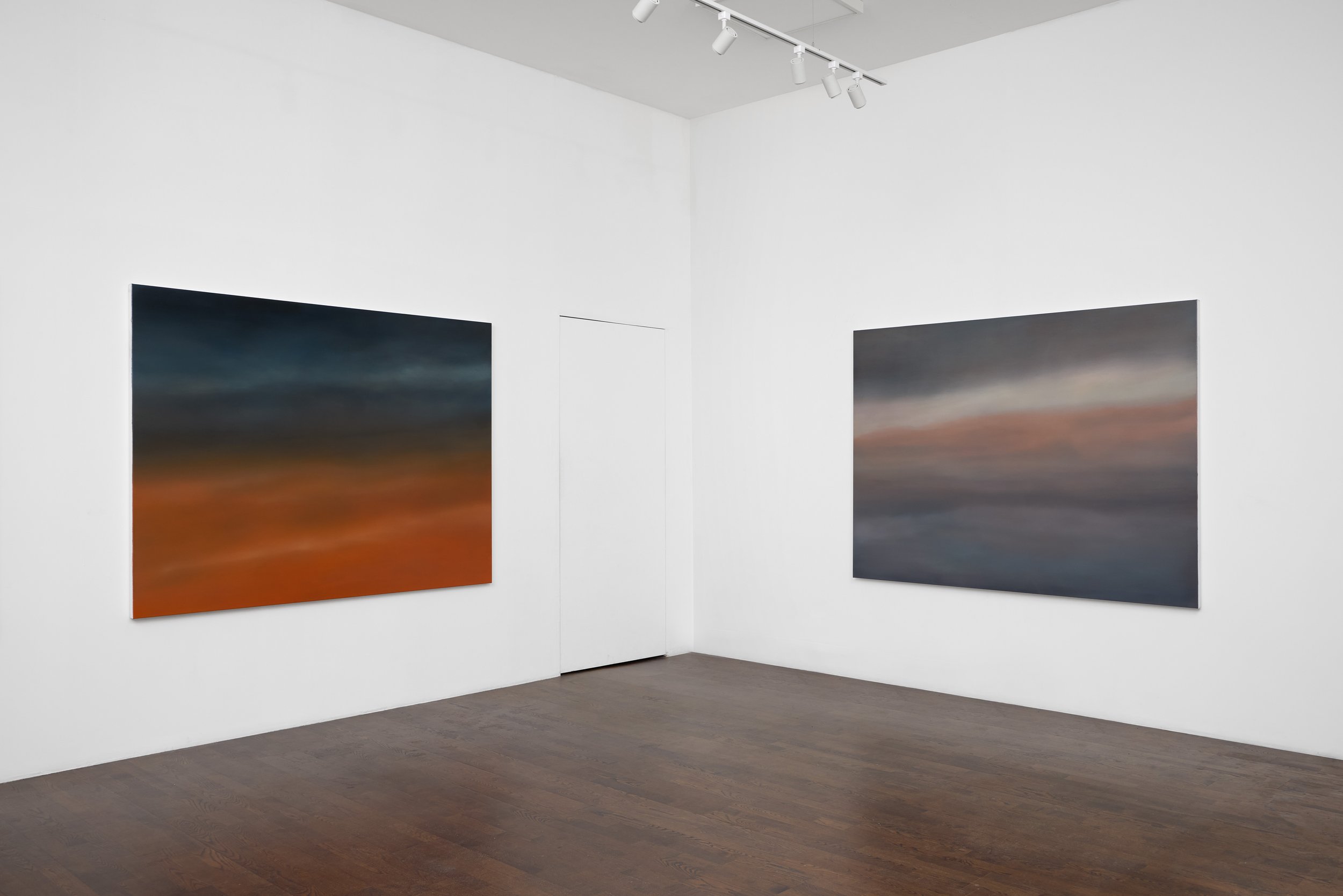
This is why viewers often read the paintings as landscapes even though they contain no depicted scenery. Human perception seeks orientation. We recognise horizons because we need them. Yet Nam’s works gently destabilise this habit. A horizontal division still organises many canvases – perhaps a dark blue-grey upper field above a glowing red band – but the boundary softens, nearly evaporating. The eye attempts to anchor itself and instead finds a shifting perceptual field. The longer one looks, the less stable the image becomes: the horizon lifts, tilts, or dissolves into layers of colour that refuse to settle into depth. The paintings reward duration. After several minutes, one notices temperature differences between colours, the way a cooler green recedes behind a warmer ochre, or how a scraped passage allows a buried violet to surface through a grey veil.
Robert Motherwell’s essay ‘On the Humanism of Abstraction’ helps clarify this position. Motherwell writes that ‘the purpose of abstraction in any field – art, science, mathematics – is, out of the incredible richness and complexity and detail of reality, “to separate”, “to select from” the complexity of reality, that which you want to emphasize, or to deal with.’ In this view, abstraction is not a simplification or reduction of reality, but an acknowledgement that in art reality cannot be grasped in its totality and must instead be encountered through chosen conditions. Nam does not paint the sea at My Khe Beach; he paints the experience of orienting oneself within a field of sensation. These are pictures that track how colour stabilises space, how the eye constructs distance, how recognition emerges from uncertainty.
Seen this way, the coastal reference in the titles feels like a prompt to a particular way of looking or thinking. The viewer approaches expecting landscape and instead encounters matter: pigment, oil, surface tension, evaporation. Gradually, these material facts reorganise themselves into something that, like Mark Rothko’s colour field works, refuse the designation of pure abstraction but call to mind the charged energy of emotional states that refuse the catcher’s net of language to define them. The coastline is never fully present, yet it persists, hovering at the edge of visibility, egged on by our imagination alone.
Request Preview
PRESS
-
![]()
ART PLUGGED
-
![]()
FAD MAGAZINE