Towards the Late Light:
Isabella Amram, Kan Hung-Ju,
Yehong Mao
27 March - 23 April, 2026
An essay by Matthew Holman.
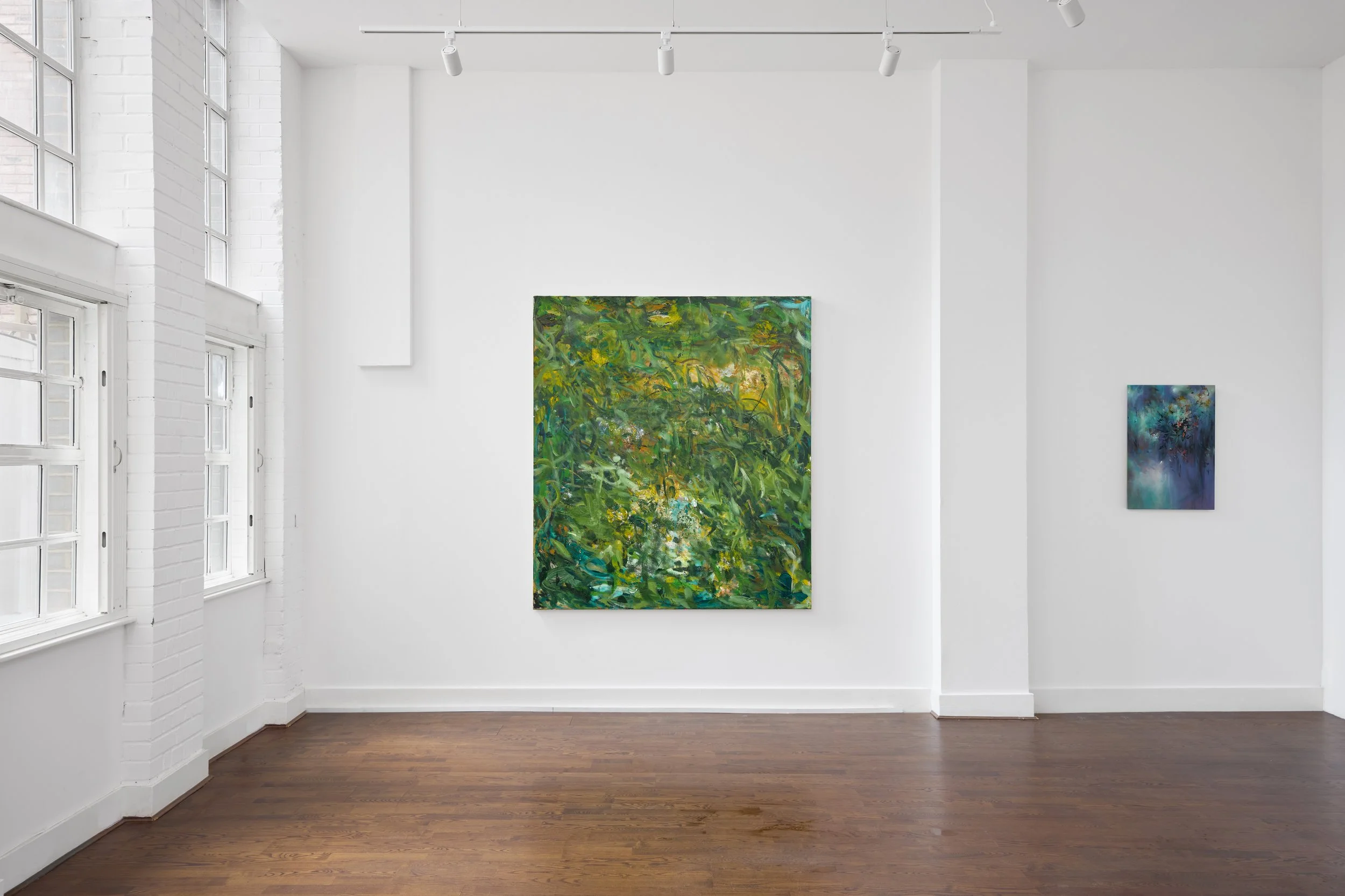
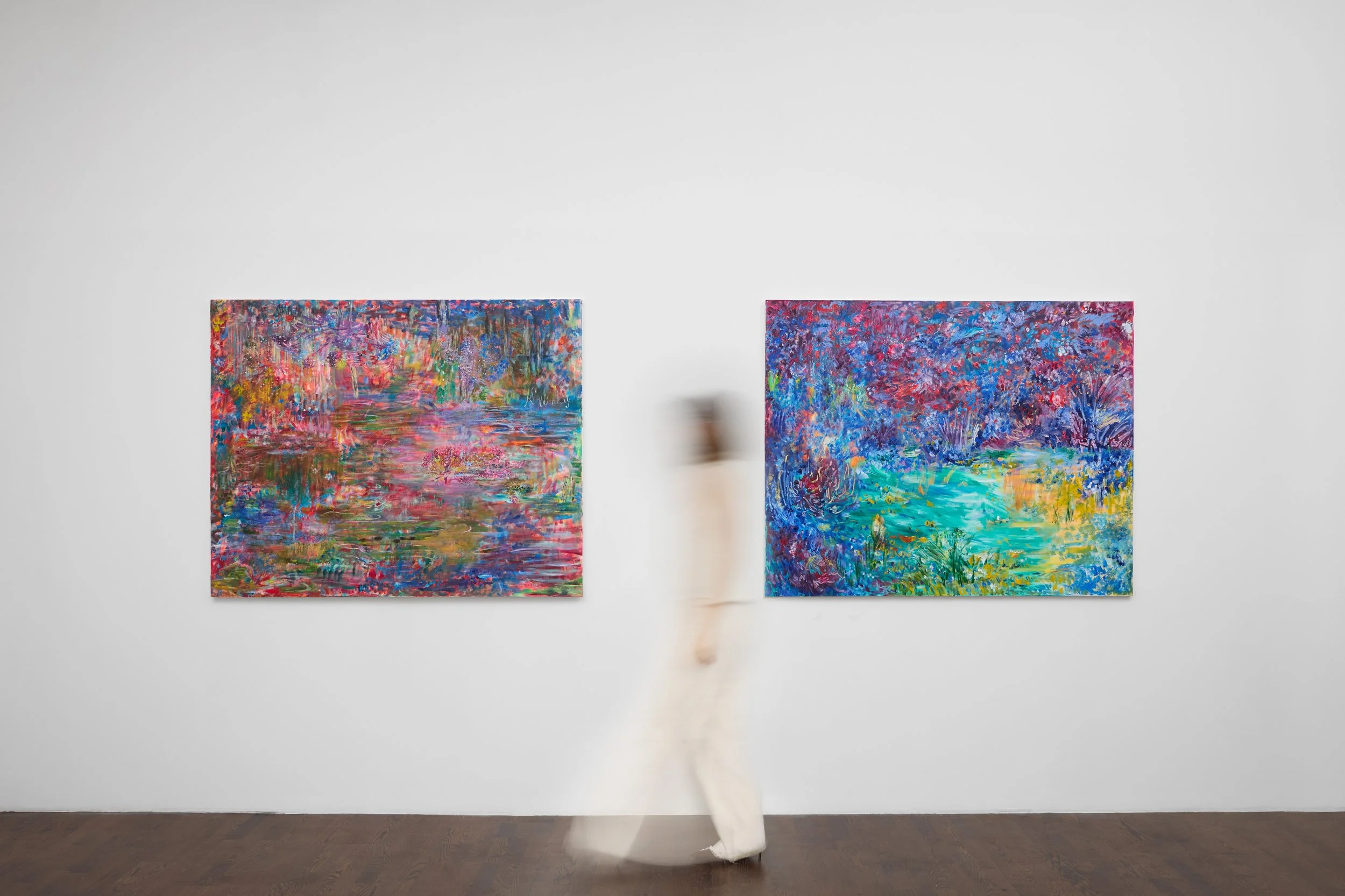
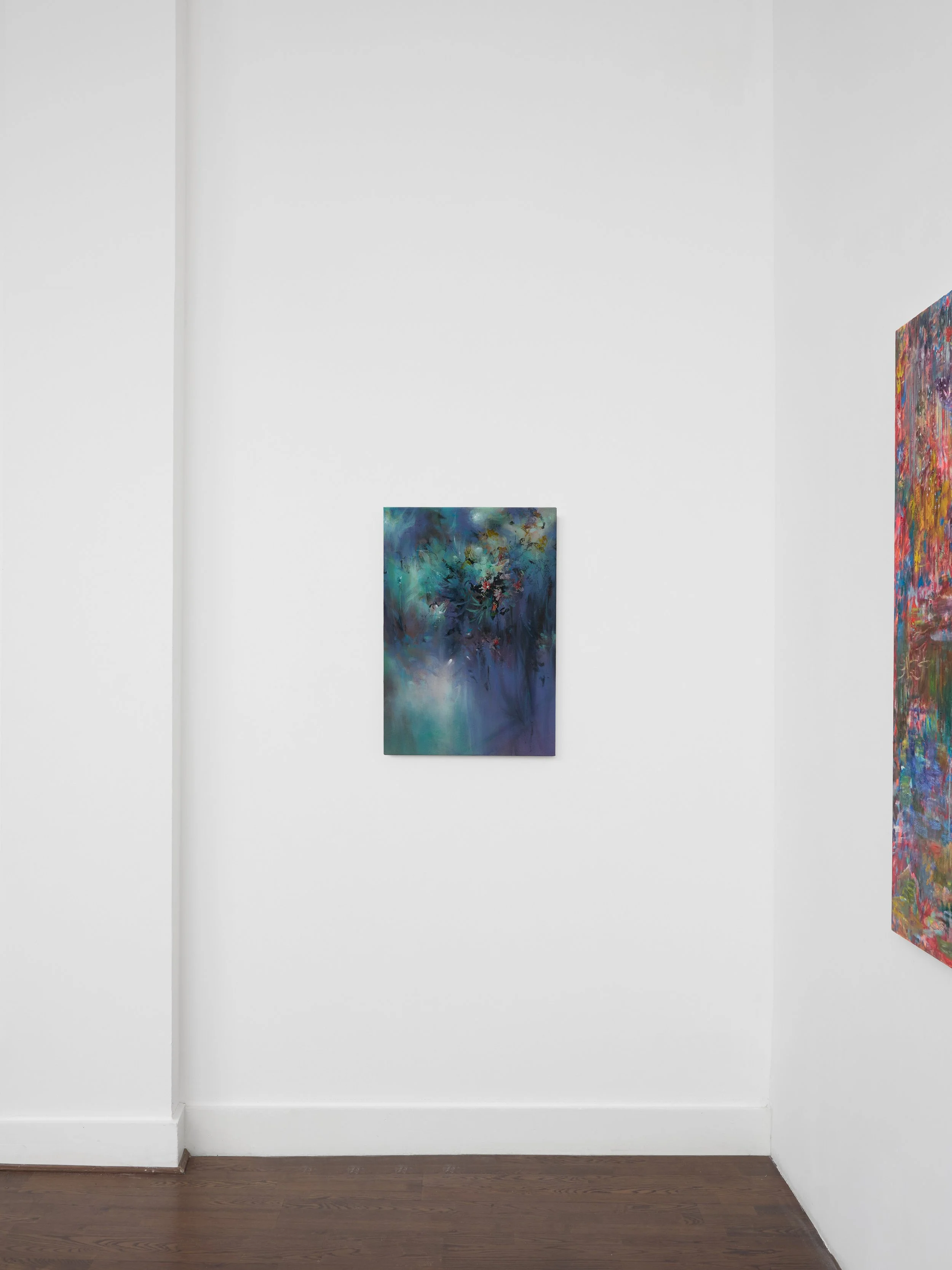
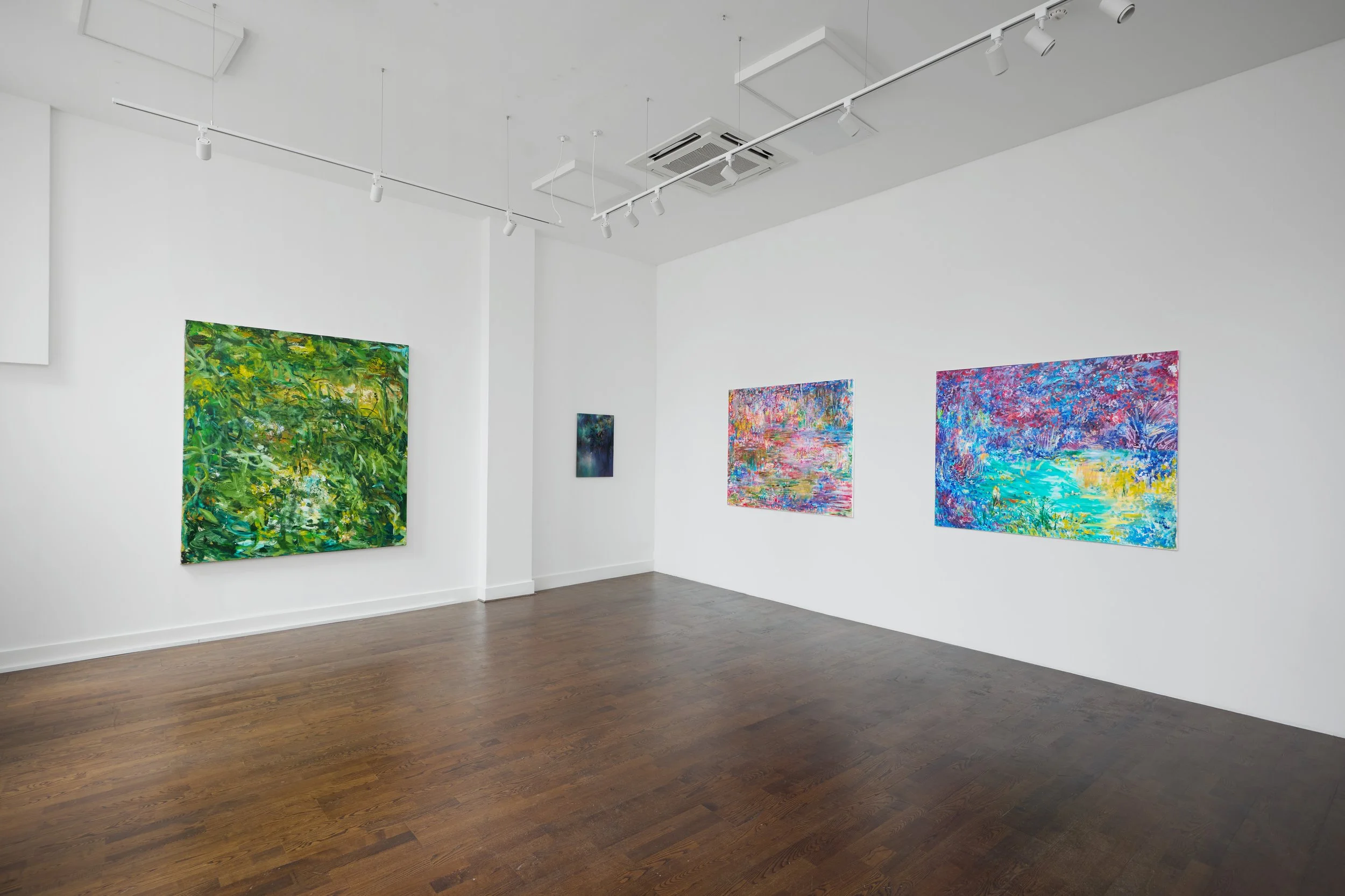
In Towards the Late Light, the works of Kan Hung-Ju, Isabella Amram, and Yehong Mao reimagine the historical tradition of landscape painting in gestural abstraction for the present moment. Their paintings emerge within a visual culture shaped by optimised digital circulation and algorithmic image-making, where surface distractions dominate our perceptive experiences. In response, each artist develops a materially grounded practice in which landscape is reconstituted through the baked-in doubts of memory recall, the irreproducibility of the mark, and the slowed contingencies of process as opposed to the instantaneous and data-driven, allowing their images to emerge as a record of their own embodied making.
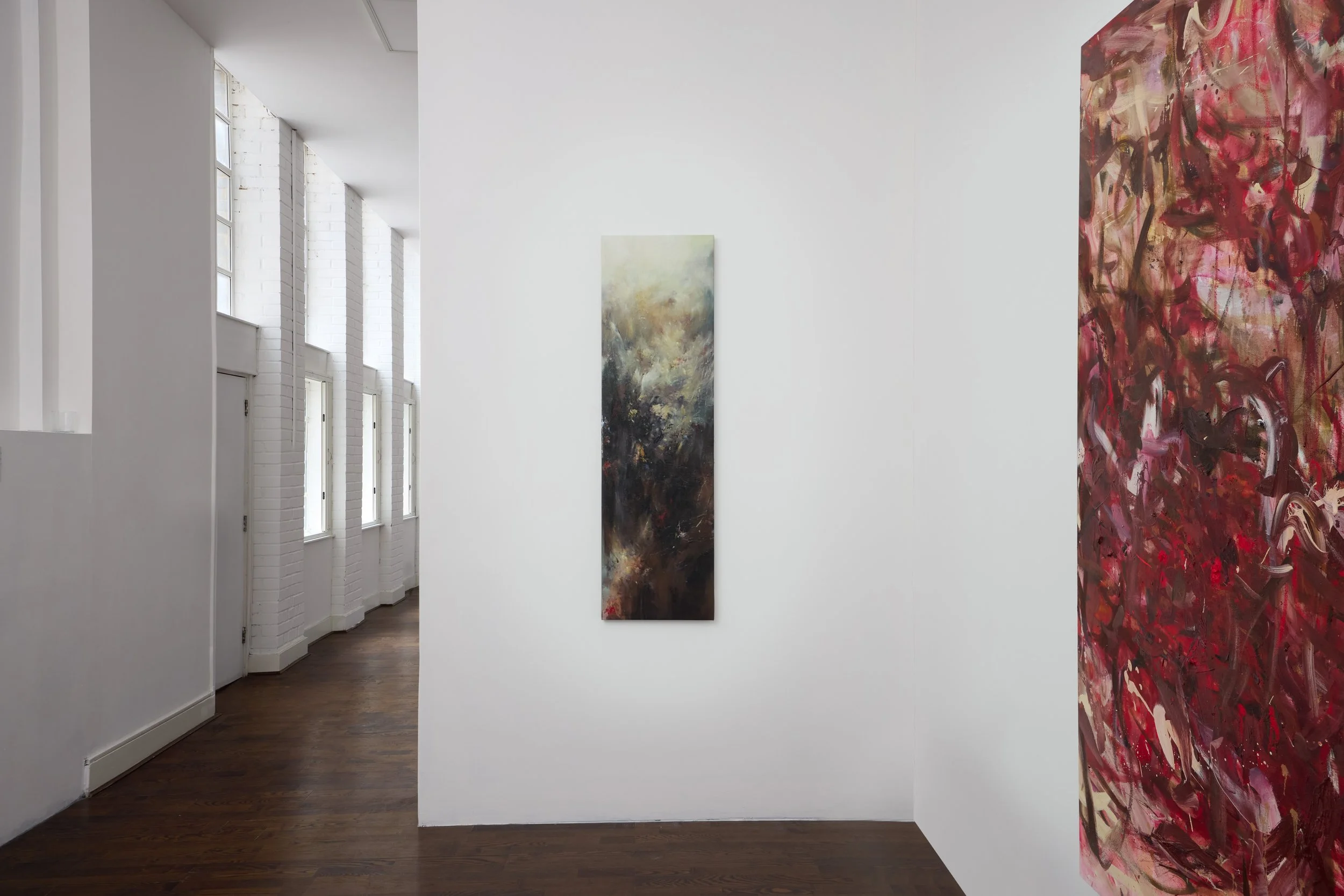
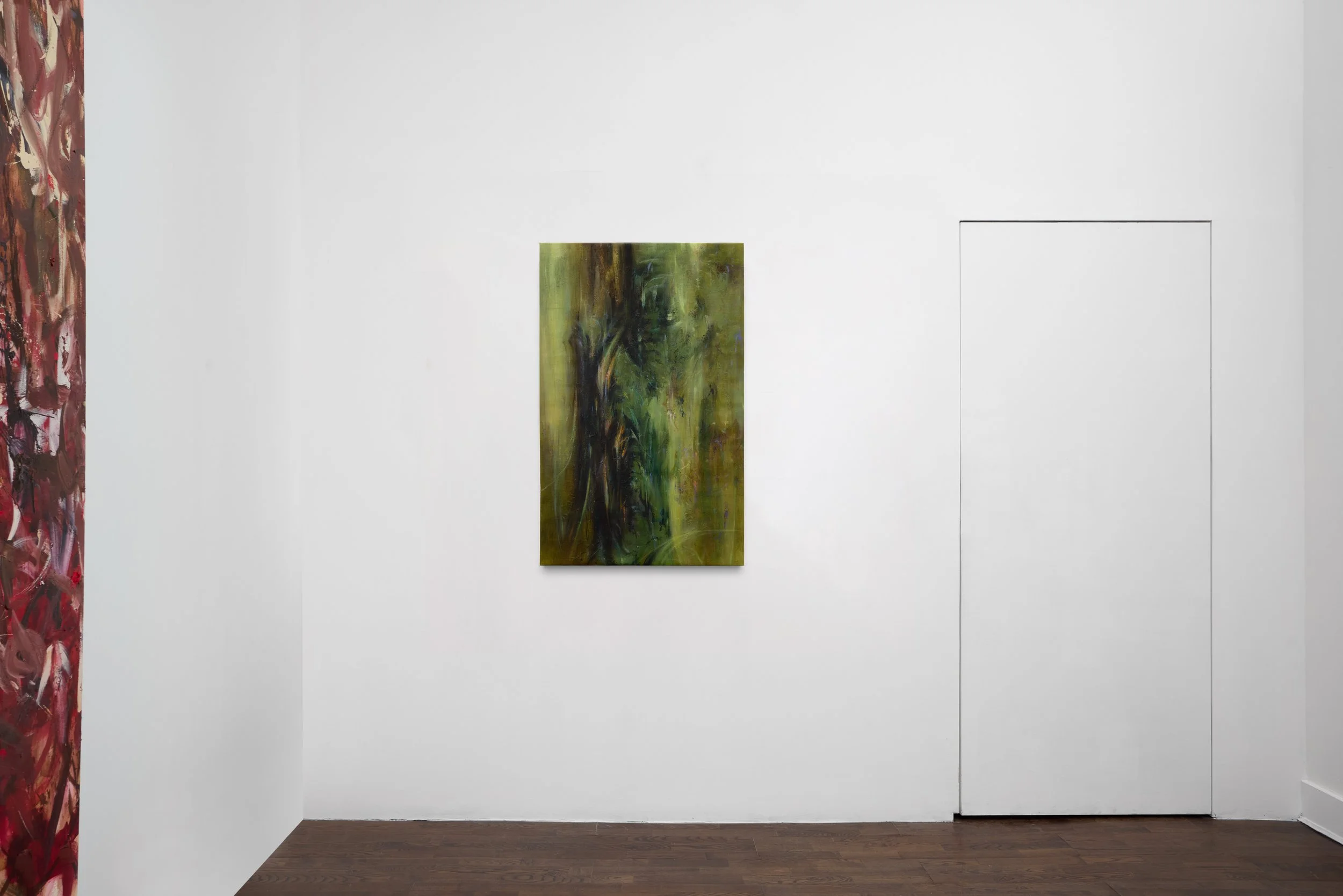
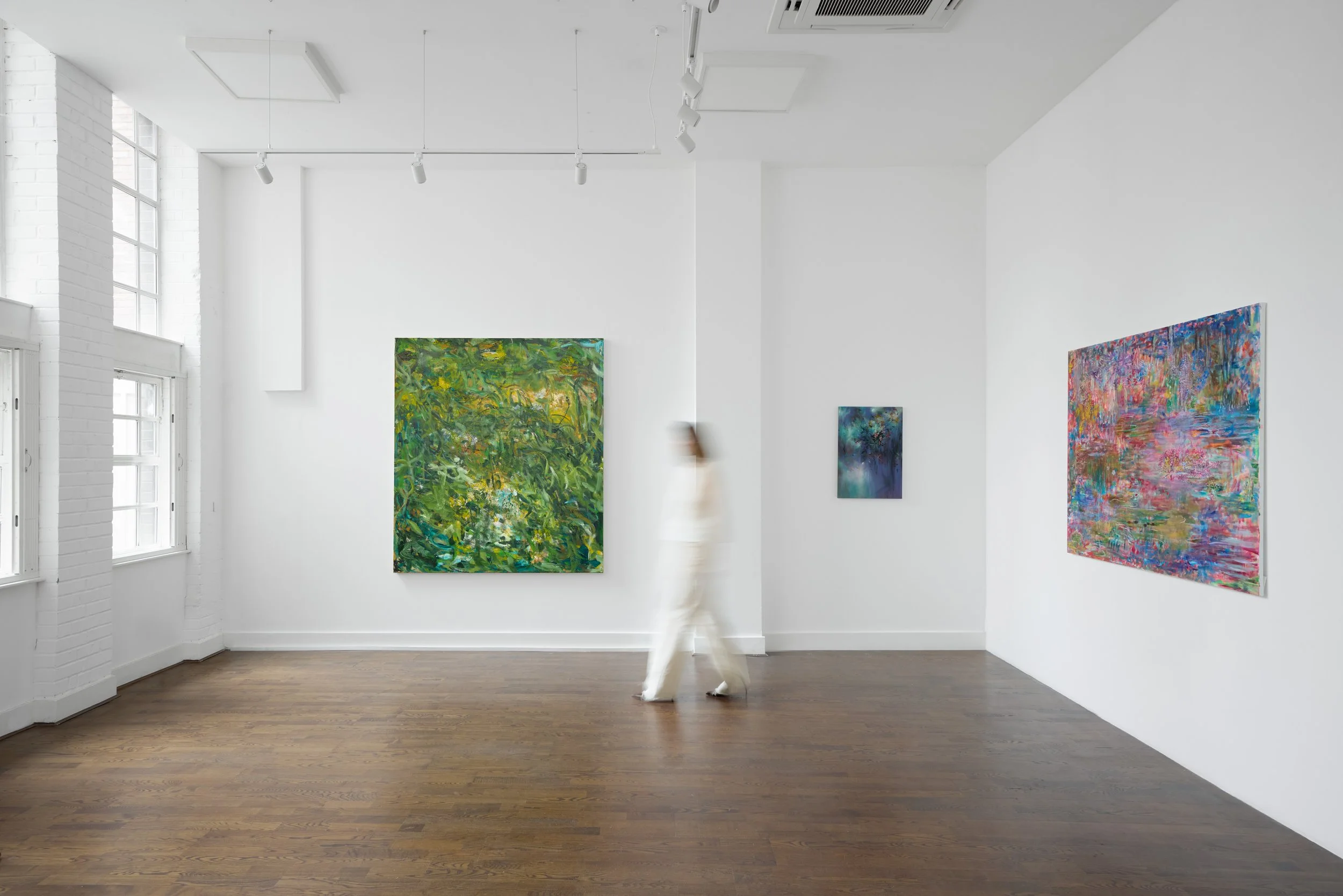
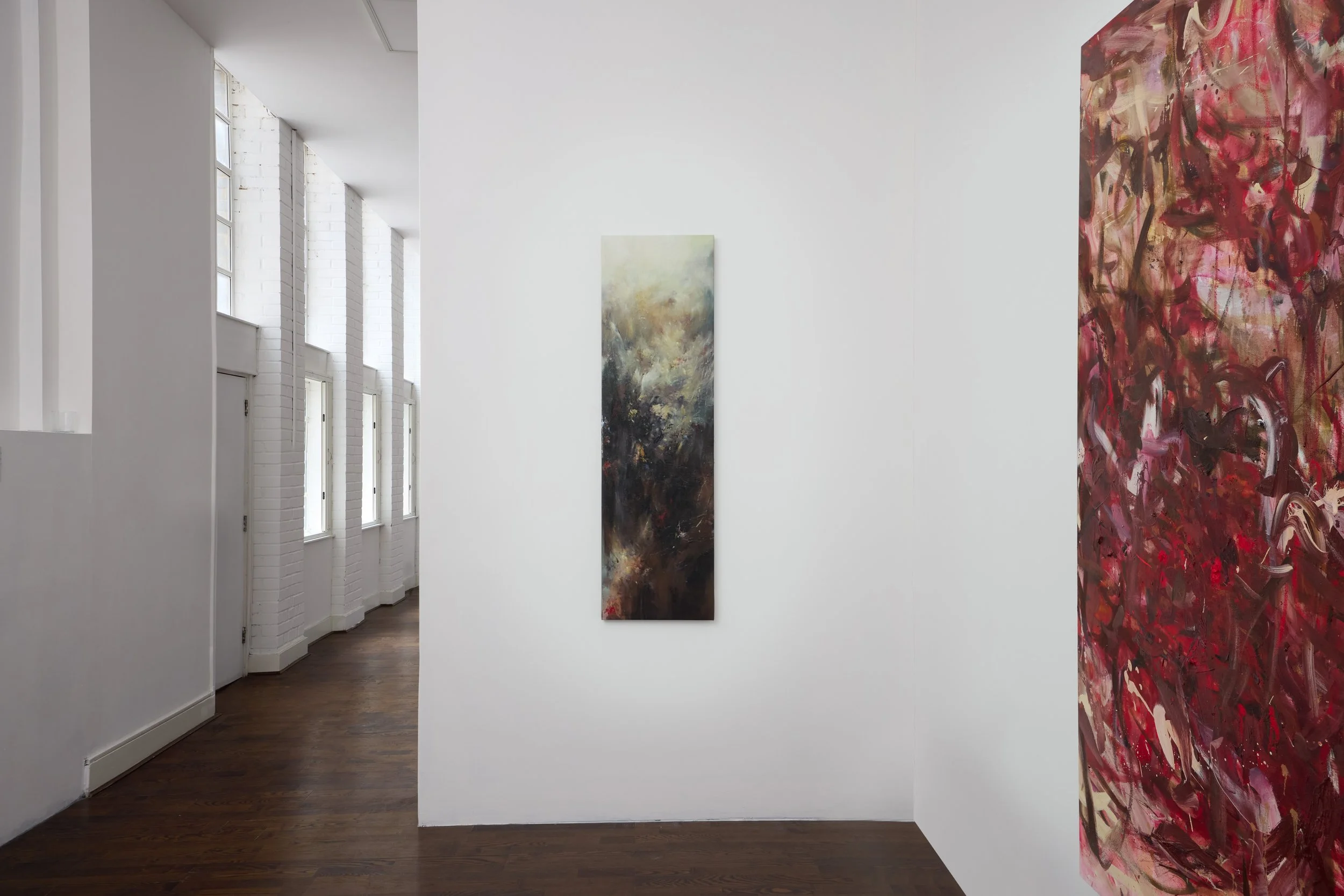
In the works of New York-based Kan Hung-Ju, each painting develops a distinct internal atmosphere: one expansive and proliferating, another suspended and inward, and another compressed into a darker, more vertical flow. Forms hover at the threshold of recognition —suggesting florals, undergrowth, troubled skies, or reflected light — yet remain unstable, continually dissolving back into the surrounding field. The expressive but nevertheless clinical mark-making recalls the taut and angular compositions of Zao Wou-Ki, as edges blur, bleed, and reassert themselves, while areas of opacity interrupt more translucent passages, creating a dynamic tension between depth and surface.
Above all, they ruminate on abstraction’s capacity to capture the subtle gradations of the seasons. In Cold Spring (Springtimes) (2026) the vertical format emphasises gravity, with downward pulls and accumulations of pigment like a tempestuous storm-cloud on an otherwise clear day. These are paintings, landscape studies by another name, that invite us to look up and see nature’s forms through our pareidolic eyes.
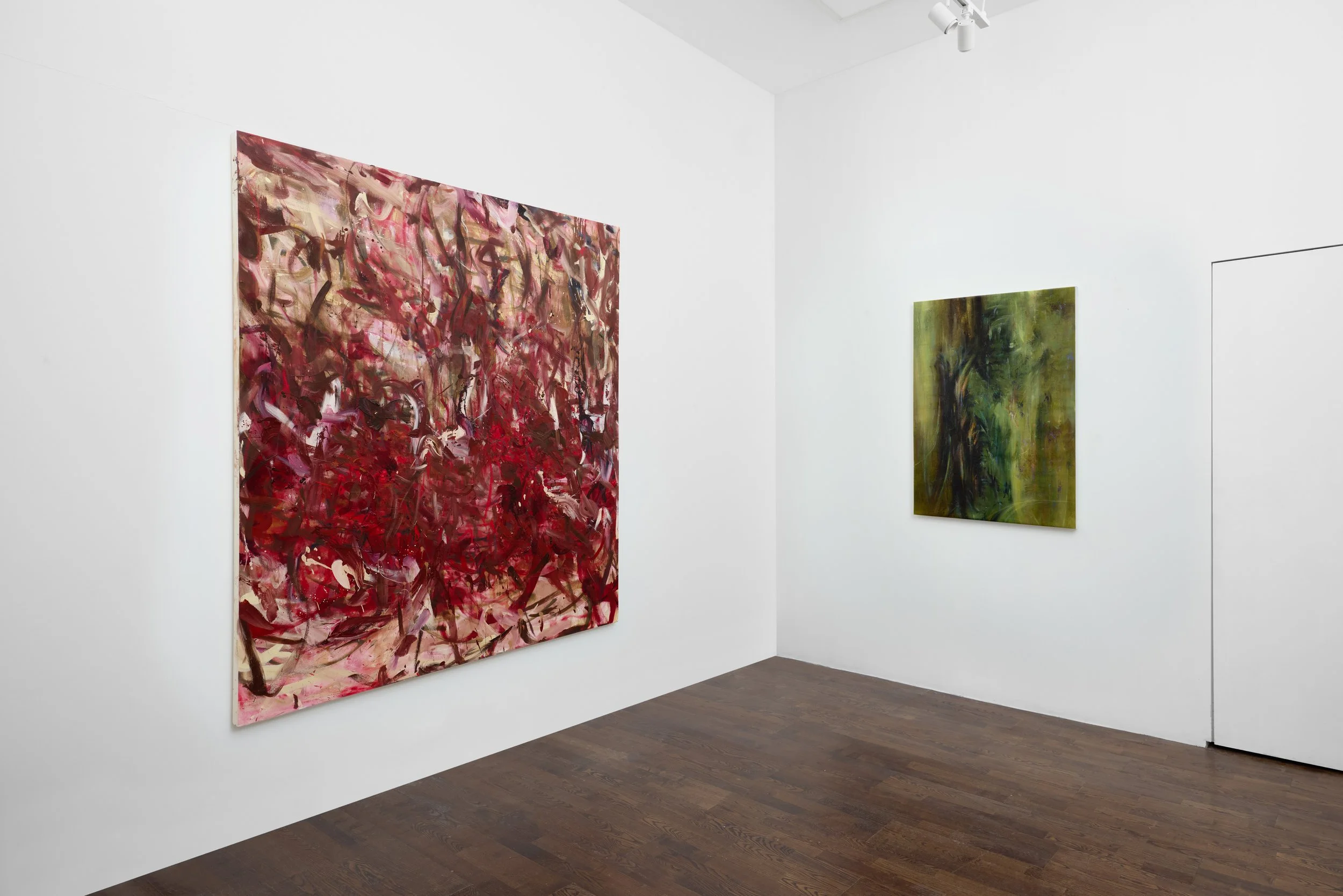
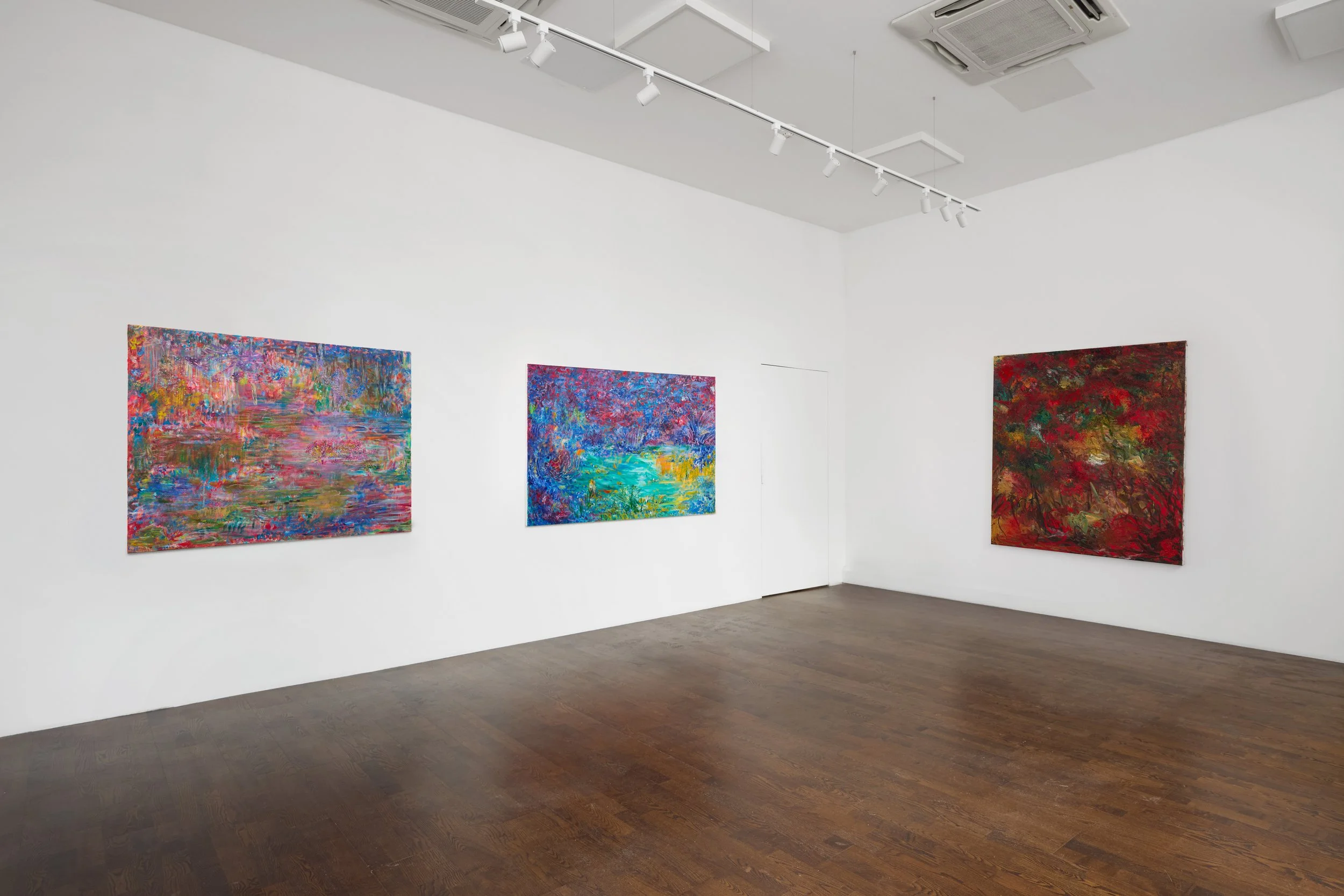
The titles of Isabella Amram’s expressively gestural oils, which variously incorporate cold wax and soft pastel on the surface, are borrowed from tarot: The Ace of Pentacles and The Six of Cups, which symbolises nostalgia and childhood innocence. Tarot offers a model for abstraction grounded not in representation but in symbolic structure and contingent process. Like a reading, the painting unfolds as a sequence of decisions shaped by intuition and interpretation of aleatory sets of relations (we turn the cards over, but we do not know what we are choosing; those upturned cards are then interpreted against what has gone before). Amram produces a field of marks that introduces a sense of time unfolding through sequence and through the layering of earlier gestures beneath later ones which, like the esoteric tarot deck, invites interpretation while maintaining a fluid and shifting meaning. In so doing, we might identify in her idiosyncratic approach to gestural abstraction certain forms of knowledge that extend beyond the rationalised algorithms that shape our age.
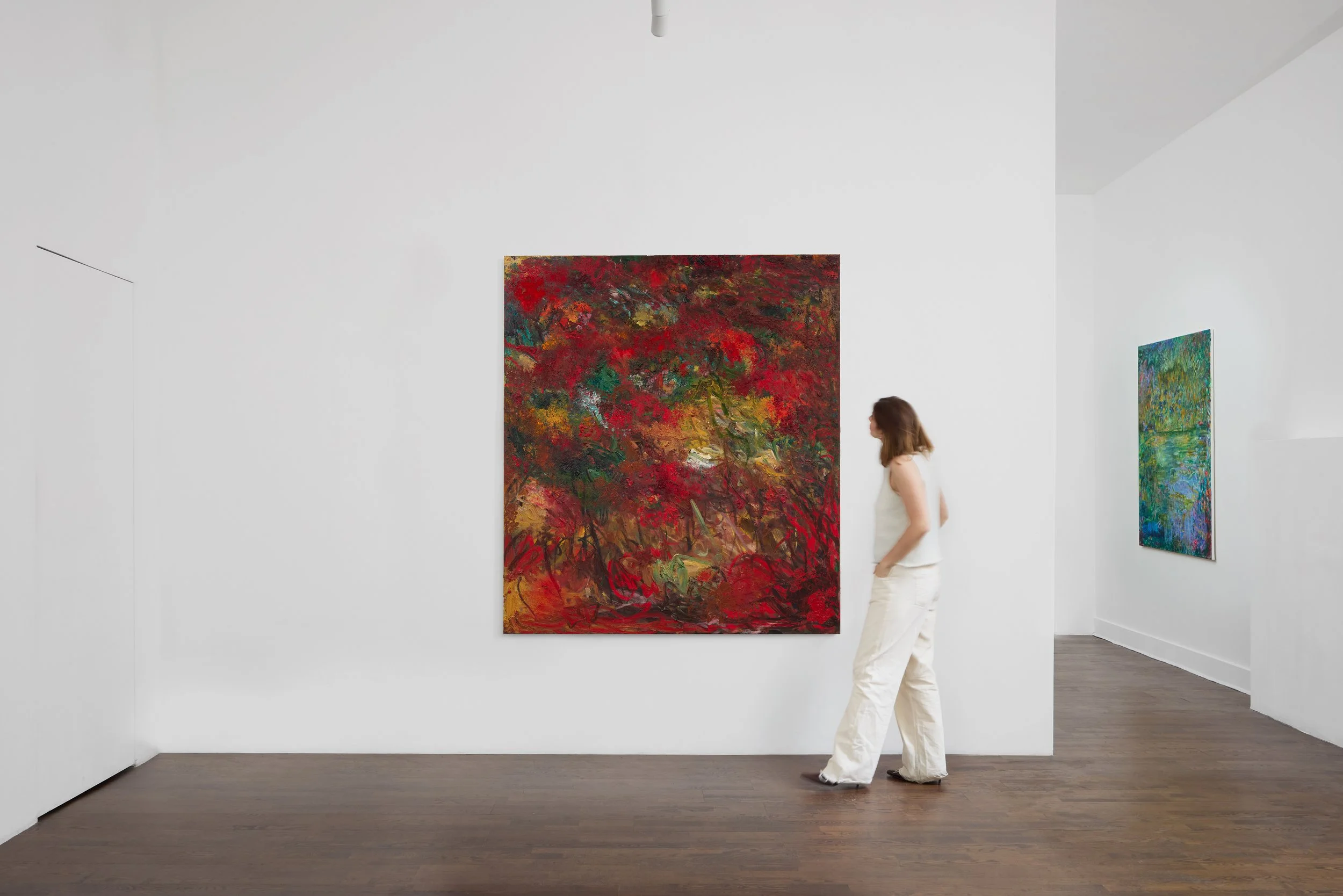
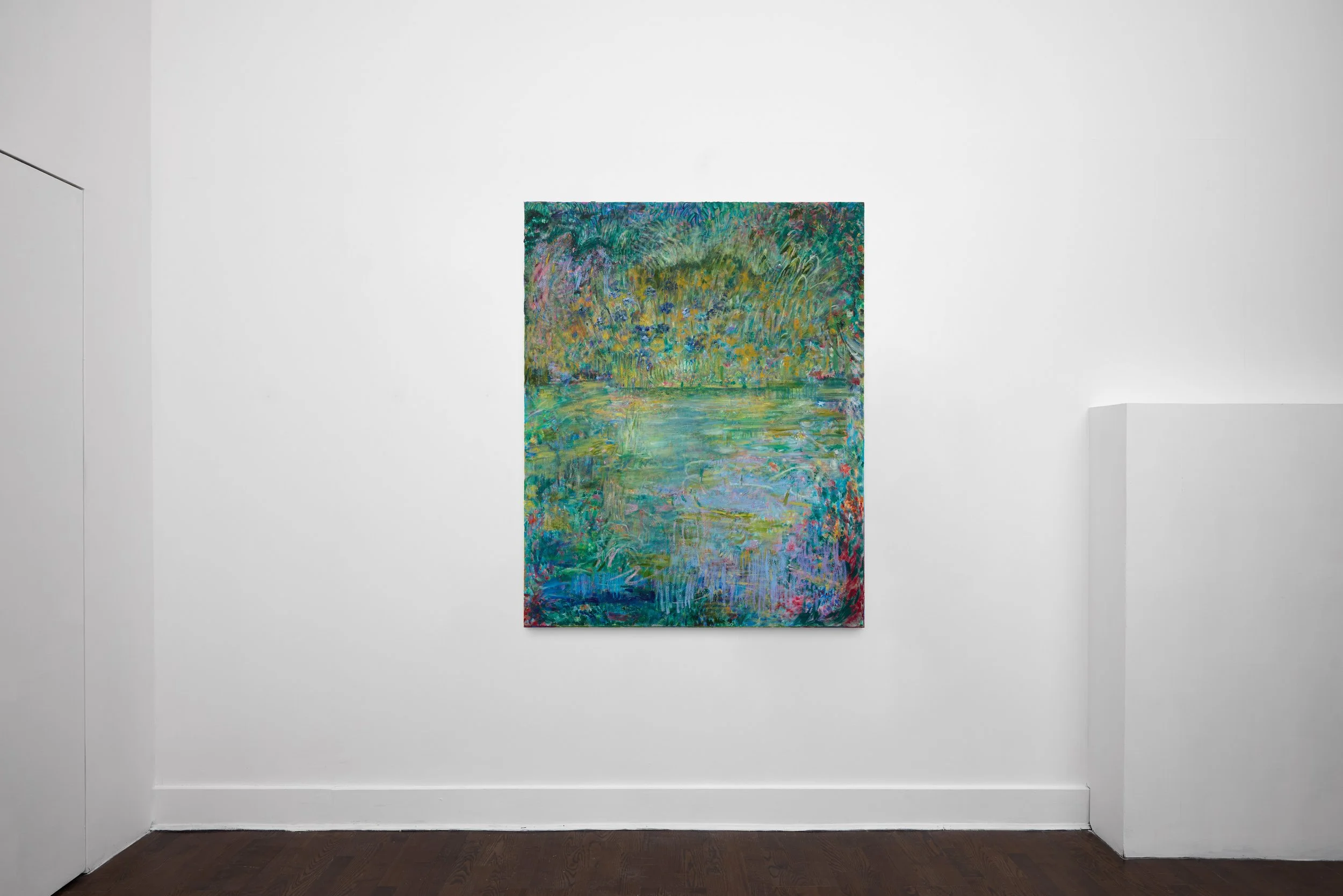
Yehong Mao’s paintings unfold as a dense, immersive field of colour: saturated reds, pinks, and oranges dominate, punctuated by cooler blues and greens that open passages of depth without ever wholly stabilising the space. Gestural marks accumulate in layers — dabs, smears, drips, and blurred sweeps — so that no single vantage point settles the composition. In Wildflower Fields in Northern California (2026), for instance, we are anchored in a specific place — the inland valleys and rolling hills of northern California, with its poppies, lupine, mustard, and tidy tips — but the artist has introduced a subtle tension between the memory of that landscape and its transformation on the canvas. The painting thus reads both as an evocation of a real environment and as a reconstruction filtered through sensation and gesture. This is a condition that finds a clear precedent in the late work of Claude Monet, whose lilies are not described but reconstituted through expressive colour, and which might be extended further by the Abstract Expressionists — perhaps the clearest ancestors of the present painters.
For the Abstract Expressionists, the image emerged through the act of painting itself, so that what is encountered is not a depiction of specific place at a defined moment in time but the trace of its transformation in and through the process of making. Clement Greenberg, writing in ‘The Later Monet’ (Art News Annual, 1957), observed that ‘today those huge close-ups which are the last Water Lilies say — to and with the radical Abstract Expressionists — that a lot of physical space is needed to develop adequately a strong pictorial idea that does not involve the illusion of deep space.’ For Greenberg, depth is suggested through relations of colour rather than constructed through illustrative means. In this sense, landscape — for Monet as for, say, Joan Mitchell, who would later live and work overlooking the Impressionist’s former home in Vétheuil, and whose Harbor, December (1956) clarifies this point — ceases to function as a window onto space and instead becomes a field of painterly relations, where depth is felt optically rather than described, and where the experience of place is reconstituted as, in Mitchell’s words, a ‘feeling about landscape’ as opposed to its representation.
However, while it might be easy to situate their work within the visual grammar of mid-century gestural abstraction, a stronger case can be made that these renewed forms of embodied mark-making emerge, as those of the New York School did, in response to the technological and political conditions of their time. If the generation of Abstract Expressionists — many of whom began their careers as social realists in the 1930s — ultimately abandoned representation in an era dominated by mass photography and what Walter Benjamin described as the ascendancy of ‘mechanical reproduction,’ it was in part because painting could no longer compete on the level of depiction. Instead, they turned toward a mode of painting that asserted itself as an embodied act unfolding in real time, so that, in the words of Greenberg’s rival Harold Rosenberg, ‘what was to go on the canvas was not a picture but an event.’
In this sense, abstraction was not a retreat from reality – for which it was regularly criticised, in an age of the nuclear bomb and the gas chambers at Dachau – but a redefinition of what painting could uniquely offer within an increasingly mediated visual culture. Today, a new generation of abstract painters appears to be operating under analogous pressures, confronting not mechanical reproduction but the accelerated circulation of digital images live streaming war in real-time, algorithmic filtration of information, and the pervasive flatness of the screen. Their insistence on tactile, materially dense processes can thus be understood as a critical response to these conditions: reclaiming the physical encounter in the face of immaterial visuality, and in doing so, reconfiguring the legacy of the so-called ‘Action Painters.’ Just as Abstract Expressionism asserted the presence of the artist’s body against the standardization of industrial modernity, the contemporary abstraction of artists like Amram, Mao, and Hung-Ju reassert the expressive materiality of their picture plane against the disembodiment of digital culture, positioning painting once again as a site of resistance grounded in touch, the stubborn opacity of matter and, above all, attention.